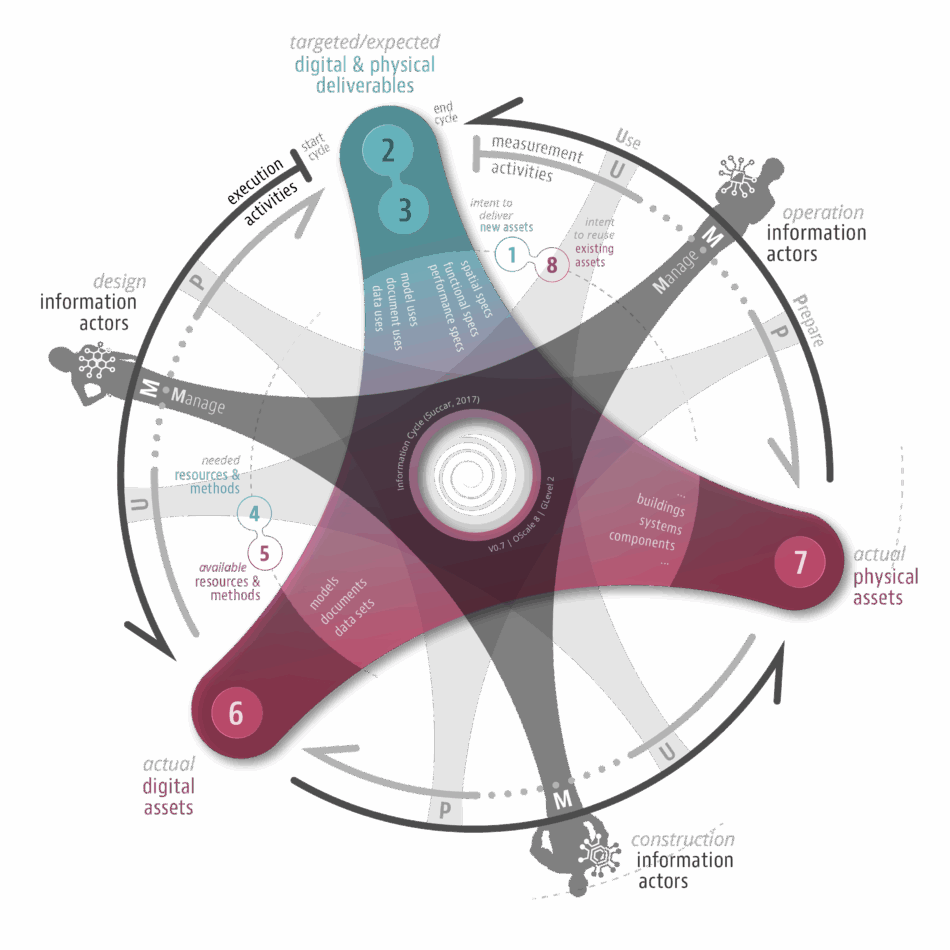
44. Information Cycle

The Information Cycles employs the three Project Lifecycle Phases – Design, Construction, and Operation (Succar, 2009) – to identify Information Actors and their high-level Information Actions connecting several Information Milestones within the Lifecycle Information Transformation and Exchange (LITE) framework (Succar and Poirier, 2020).
41. Macro Diffusion Responsibilities

This conceptual model (Figure 1) identifies nine BIM player groups (industry stakeholders) distributed across three BIM Fields (technology, process and policy) as defined within the BIM Framework. The nine player groups are: policy makers, educational institutions, construction organisations, individual practitioners, technology developers, technology service providers, industry associations, communities of practice, and technology advocates.

36. BIM Ontology

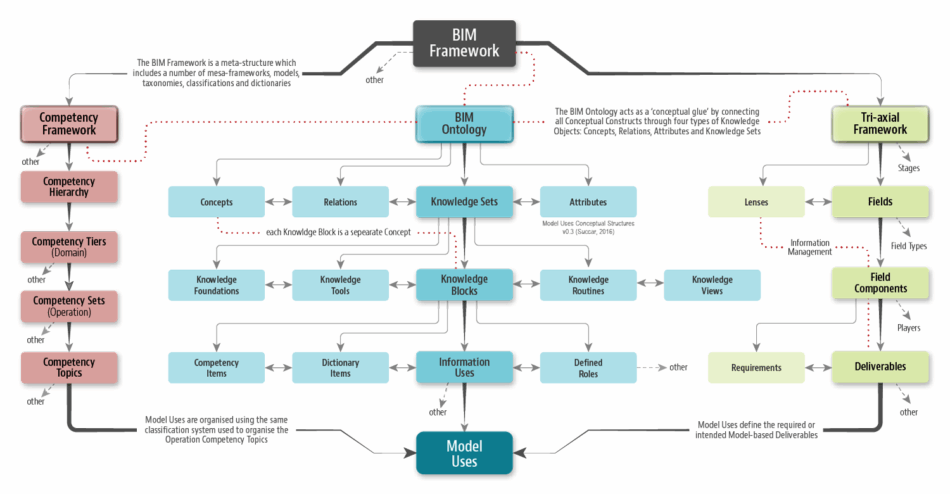
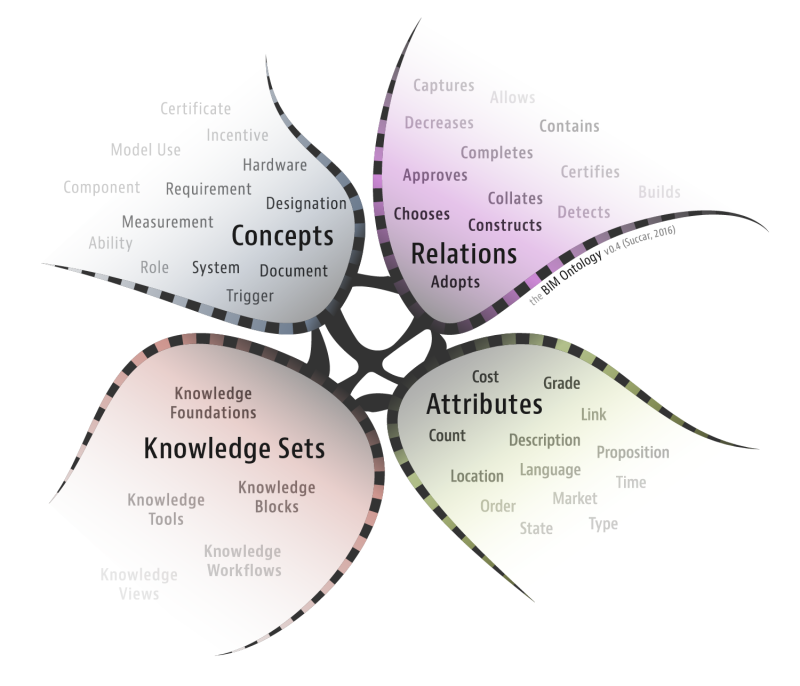
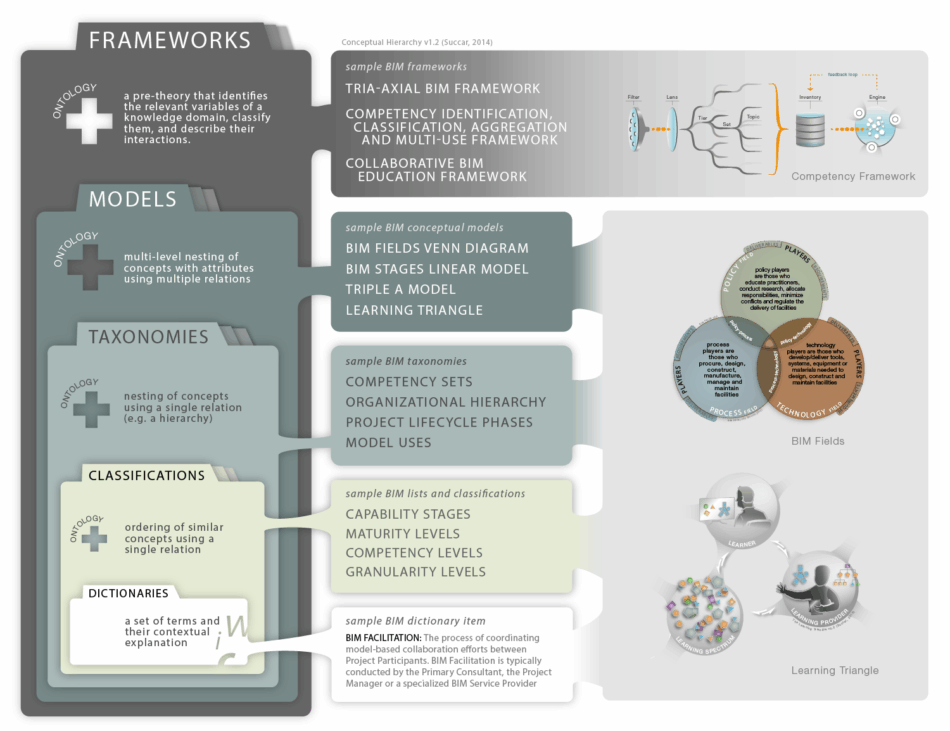
The BIM ontology is an informal, semi-structured, conceptual ‘domain ontology’ used for knowledge acquisition and communication between people. It is intended to represent knowledge interactions (push/pull) between BIM players, their deliverables and requirements, and facilitate the validation of conceptual models.

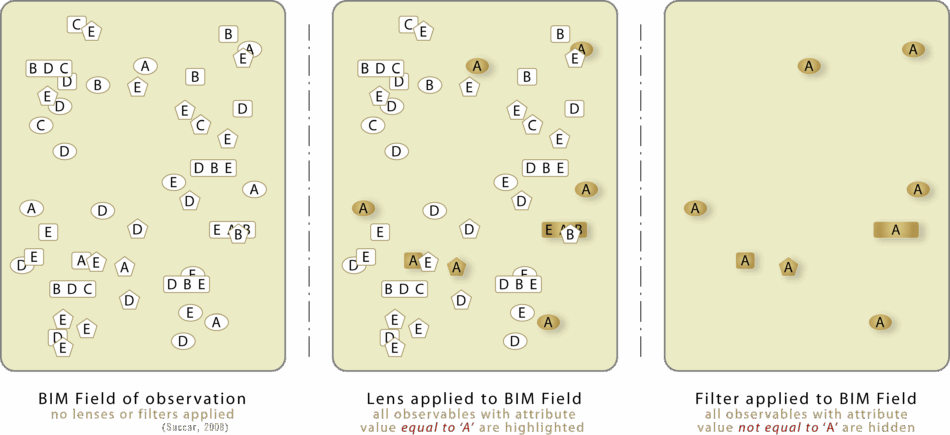
33. Difference between Lenses and Filters

Lenses and Filters are investigative tools of enquiry and domain analysis allowing the discovery of concepts and relations. The difference between (BIM) Lenses and Filters can be summarised as such: Lenses are additive and are deployed from the ‘investigator’s side’ of BIM Field observation while Filters are subtractive and are deployed from the ‘data side’. Lenses highlight observables that meet …

32. Relevance Metric

   NBP Relevance Index – Sample Chart v0.2 (Full Size Image – 102Kb) The Relevance Metric is primarily used to compare the relevance (impact, currency and authority) of one entity relative to another, or relative to a specific stakeholder group. For example the Noteworthy BIM Publication Relevance Index (NBP-RI) compares the relevance of an NBP relative to other NBPs within and …

2. BIM Fields

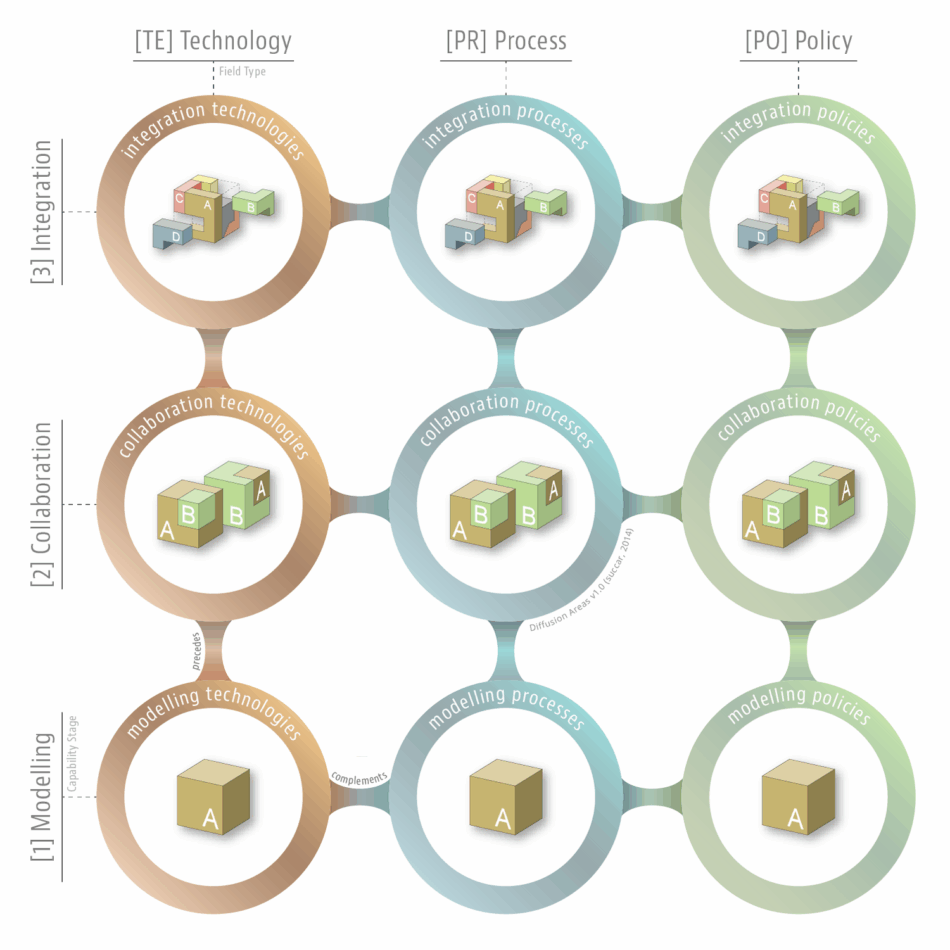
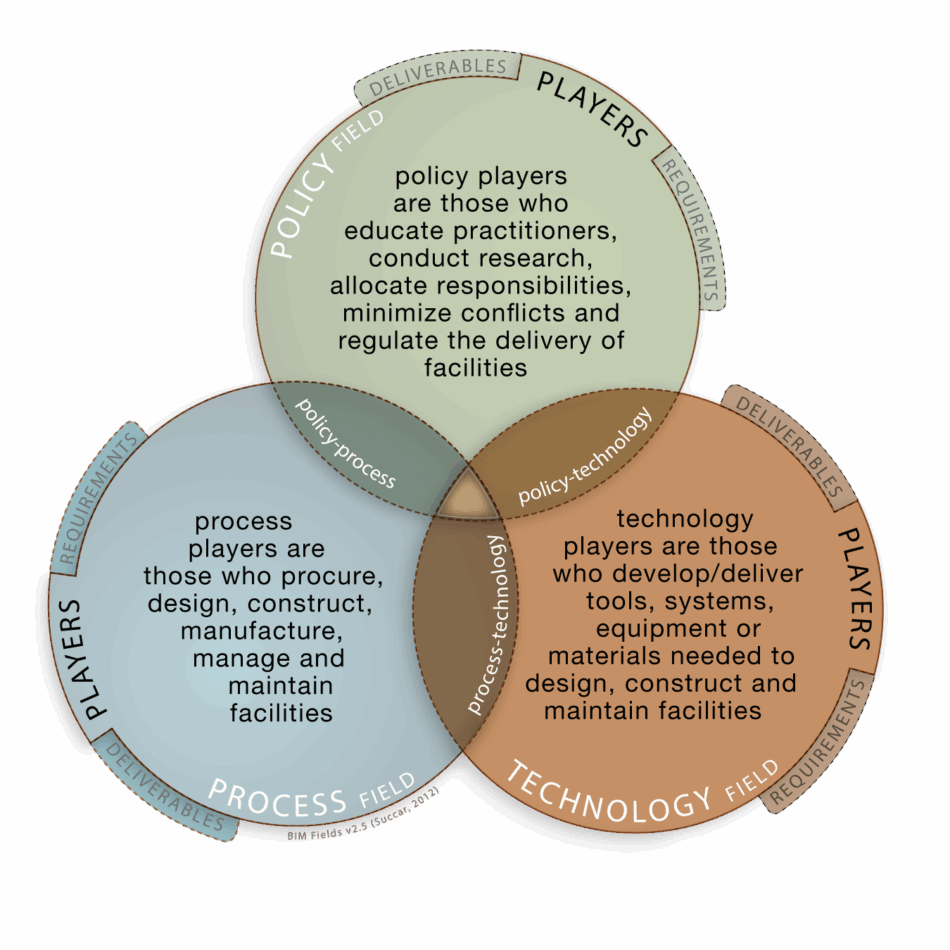
Click of a larger version | older versions: v2.0 – 2010, v1.2 – 2008 and v1.1 – 2007 Also available in Spanish, German, Italian and French This conceptual model represents BIM Fields, the first dimension of the Tri-axial Model. BIM Fields refer to all topics, activities, and actors across the BIM domain. The Venn diagram (three overlapping circles) identifies Field Types (Technology, Process and Policy), Field Components (Players, Deliverables …

1. The Tri-Axial Framework

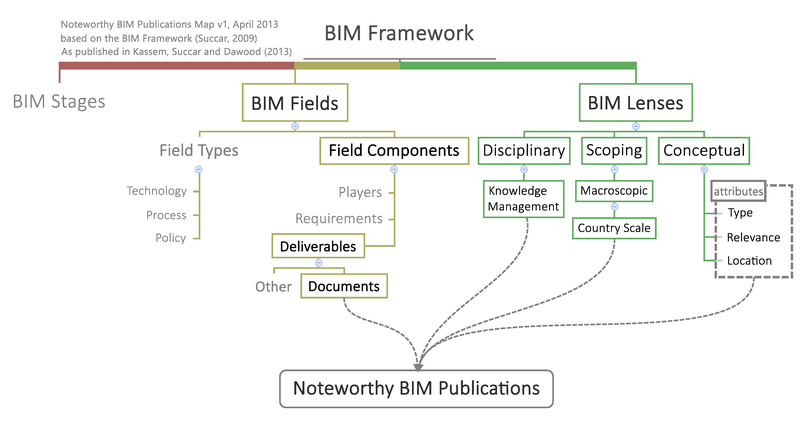
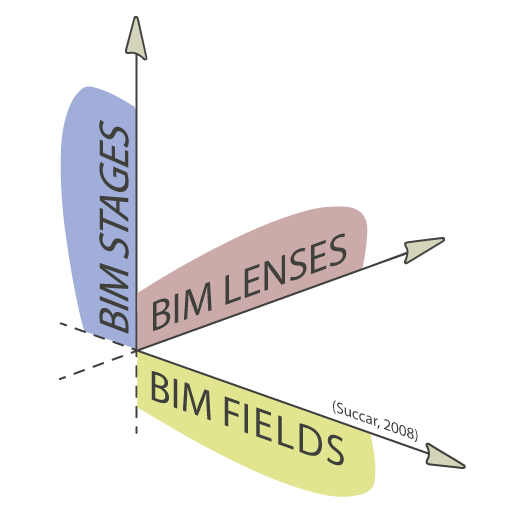
This conceptual model explains the multi-dimensional relationship between the three main components of the BIM framework: BIM fields of activity identifying domain players, their requirements and deliverables; BIM stages delineating minimum capability benchmarks; and BIM lenses providing the depth and breadth of enquiry necessary to identify, assess and qualify BIM fields and BIM stages.