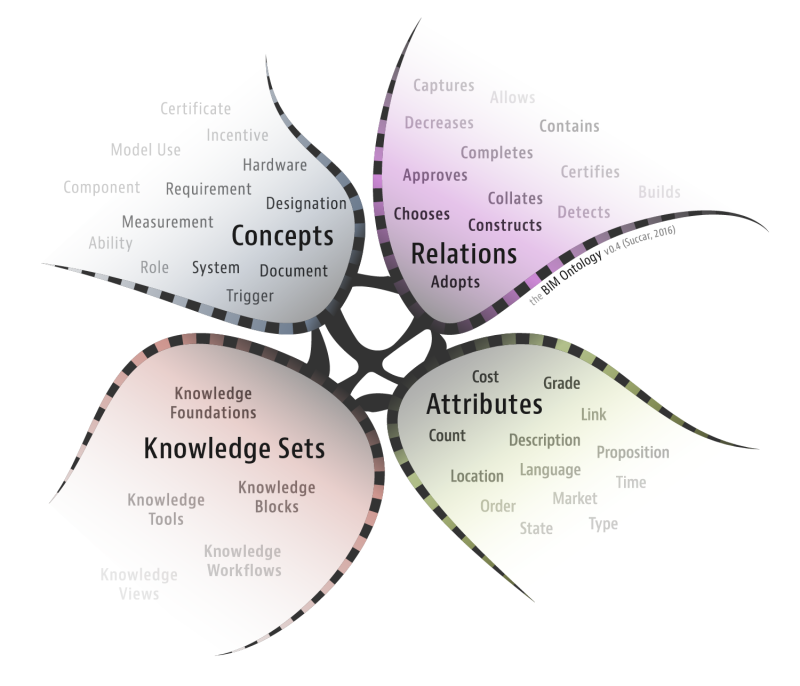
The BIM ontology is an informal, semi-structured, conceptual ‘domain ontology’ used for knowledge acquisition and communication between people. It is intended to represent knowledge interactions (push/pull) between BIM players, their deliverables and requirements, and facilitate the validation of conceptual models.
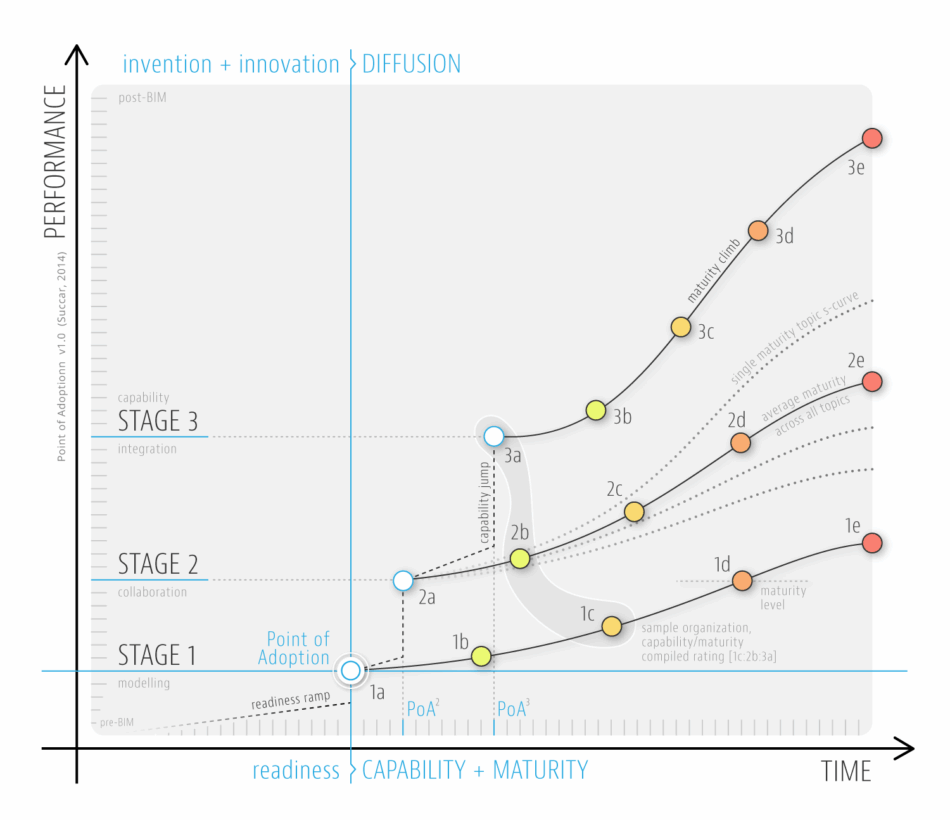
35. Point of Adoption
The Point of Adoption Model highlights how capability stages and maturity levels are used to assess/facilitate BIM implementation within organization and – in combination with other Framework parts – BIM diffusion across markets.
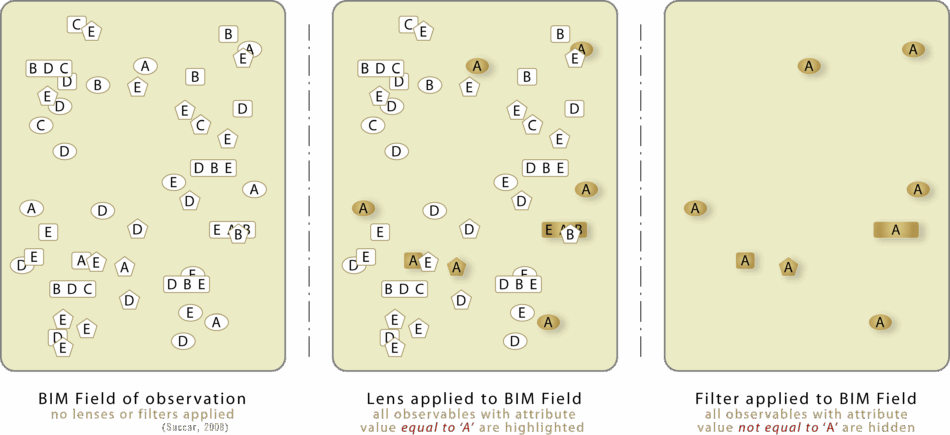
33. Difference between Lenses and Filters
Lenses and Filters are investigative tools of enquiry and domain analysis allowing the discovery of concepts and relations. The difference between (BIM) Lenses and Filters can be summarised as such: Lenses are additive and are deployed from the ‘investigator’s side’ of BIM Field observation while Filters are subtractive and are deployed from the ‘data side’. Lenses highlight observables that meet …
32. Relevance Metric
NBP Relevance Index – Sample Chart v0.2 (Full Size Image – 102Kb) The Relevance Metric is primarily used to compare the relevance (impact, currency and authority) of one entity relative to another, or relative to a specific stakeholder group. For example the Noteworthy BIM Publication Relevance Index (NBP-RI) compares the relevance of an NBP relative to other NBPs within and …
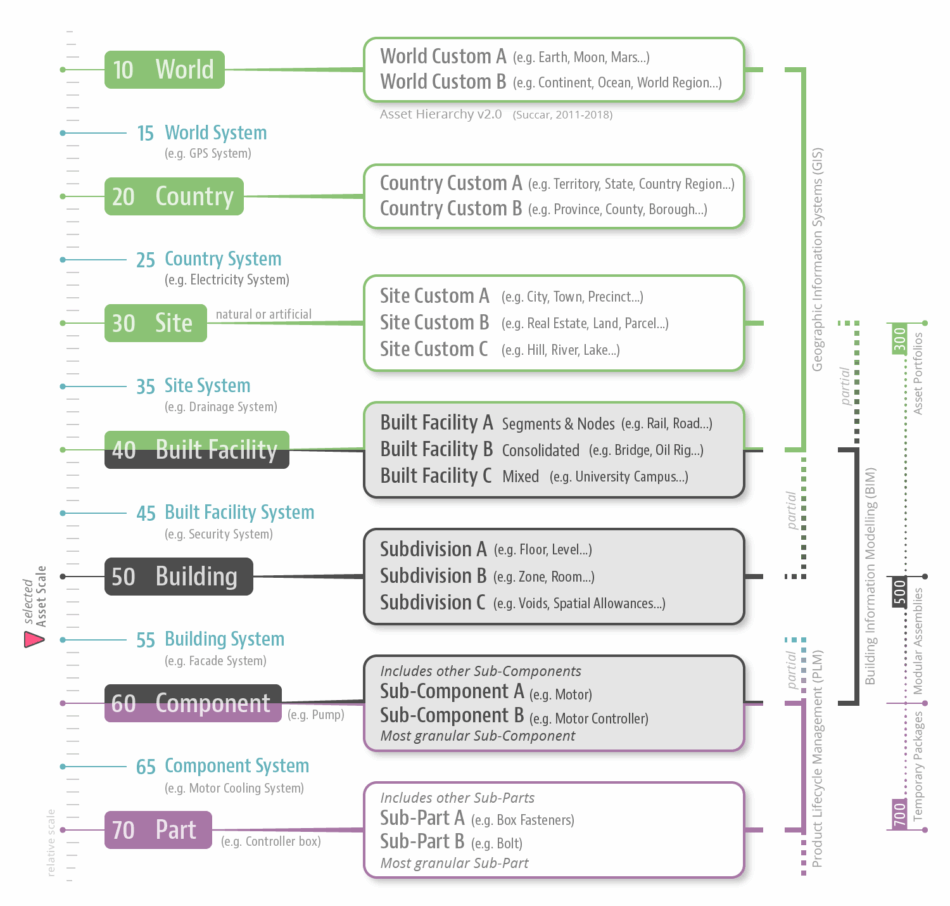
30. Asset Hierarchy
The Asset Hierarchy model organises Physical Deliverables/Assets by relative scale
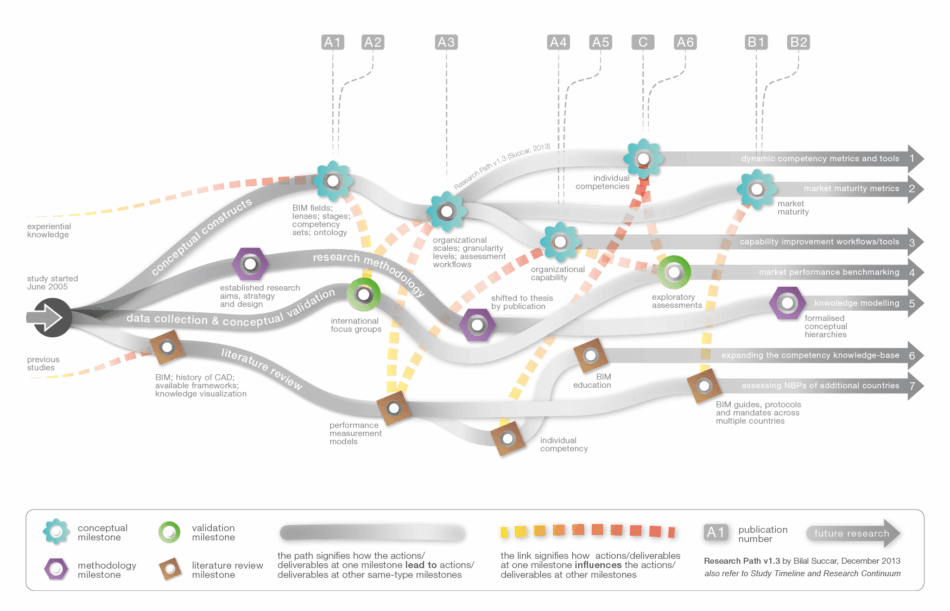
29. Research Path
The Research Path (Succar, 2013) identifies the major milestones along four research sub-paths: literature review, research methodology, conceptual development and data collection.
28. Research Timeline
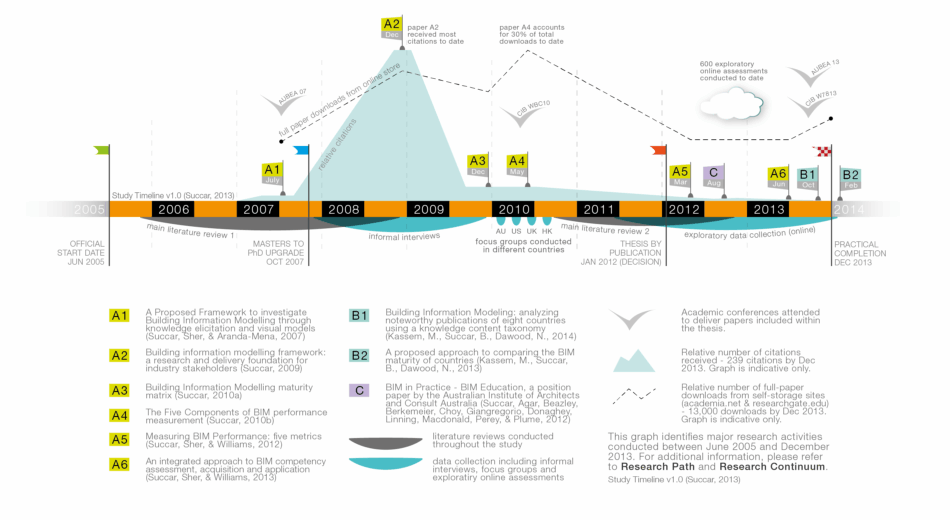
The Research Timeline graph identifies literature reviews, data collection efforts and published papers (including citations and downloads) between June 2005 and December 2013.
27. Conceptual Hierarchy
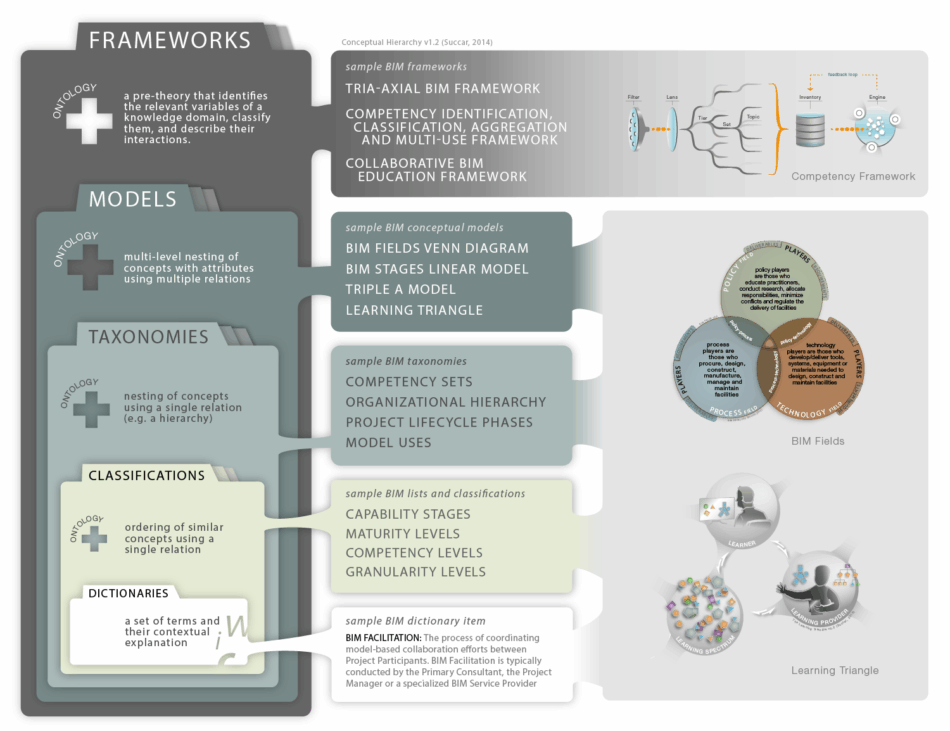
The BIM framework is a collection of interrelated conceptual constructs – models, taxonomies, classifications, and dictionaries – glued together by a common conceptual ontology.
25. Knowledge Content Taxonomy
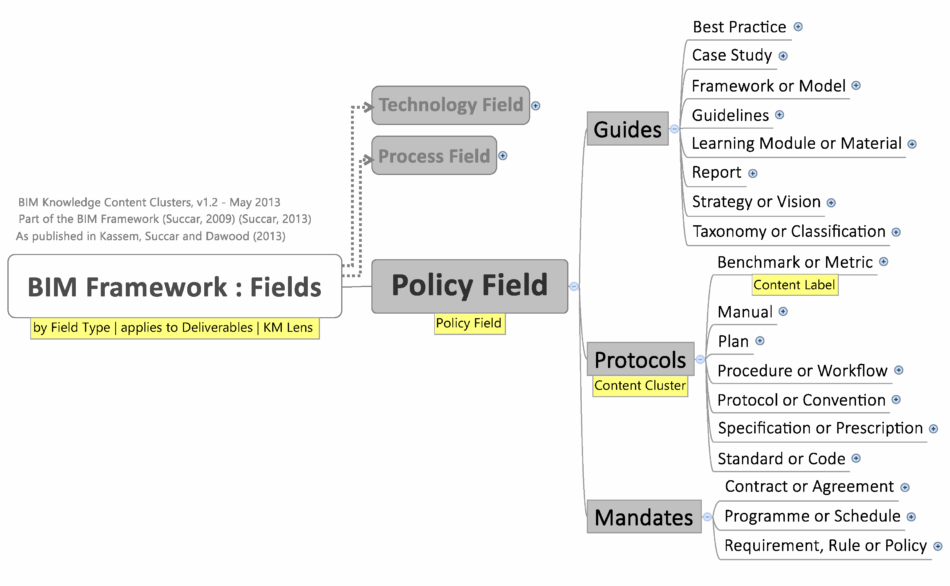
The Knowledge Content Taxonomy (KCT) includes several classifications. The main classification identifies three knowledge content clusters (guides, protocols and mandates) which are subdivided into eighteen knowledge content labels (e.g. report, manual, and contract).
24. Noteworthy BIM Publications
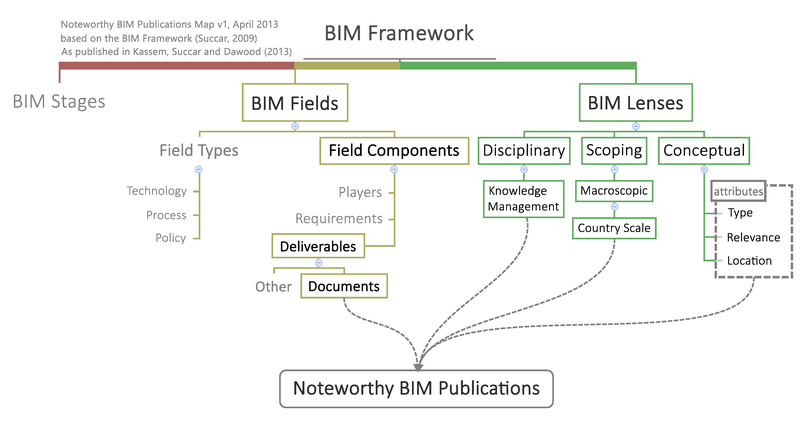
Noteworthy BIM publications (NBP)s are publically-available documents developed by various industry and academic entities; aimed at a wide audience; and intended to promote BIM understanding, regulate BIM implementation or mandate BIM requirements.
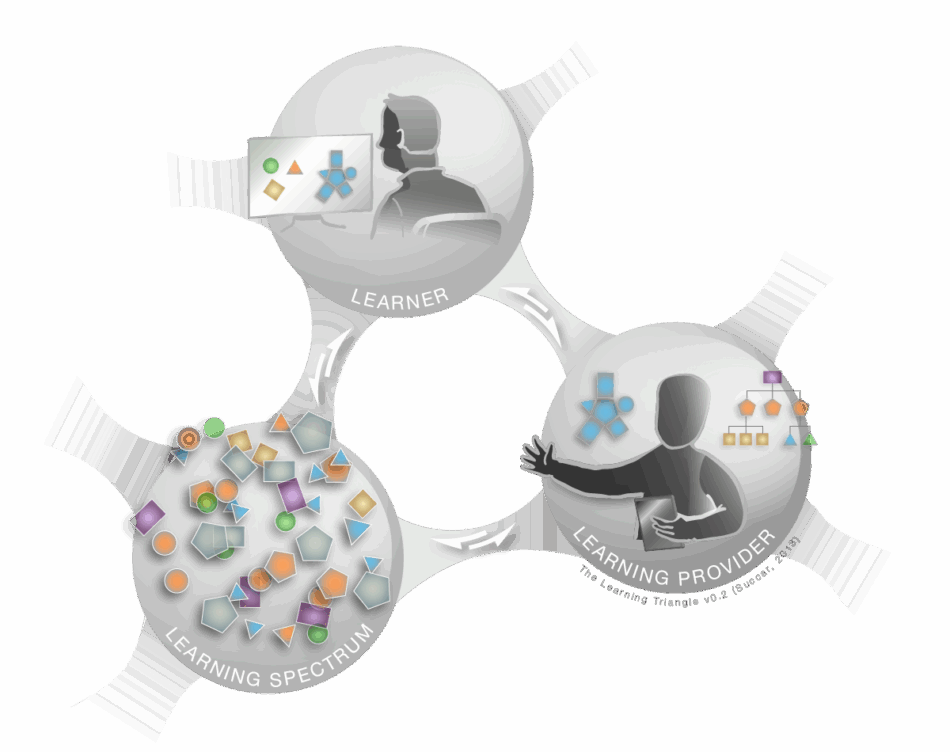
23. BIM Learning Triangle
This conceptual model represents BIM learning as a triangular interaction between BIM learners, BIM learning providers and the BIM learning spectrum.
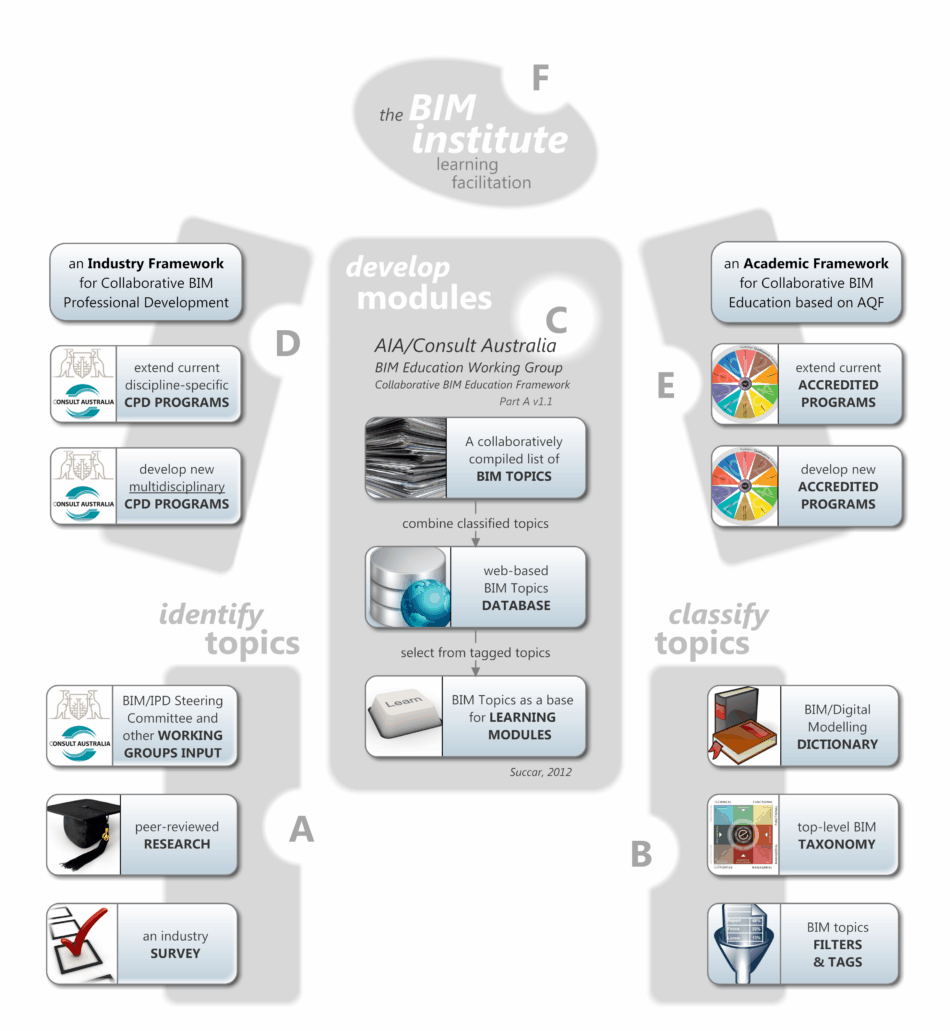
22. Collaborative Education Framework
The collaborative education framework (CEF) has been developed as a joint effort between academia and industry in Australia. CEF was first published as part of the AIA/CA BIM in Practice, BIM Education position papers (AIA/CA, 2012) and is built around the principles, models, taxonomies, and classifications of the BIM Framework. CEF includes six main complementary components.
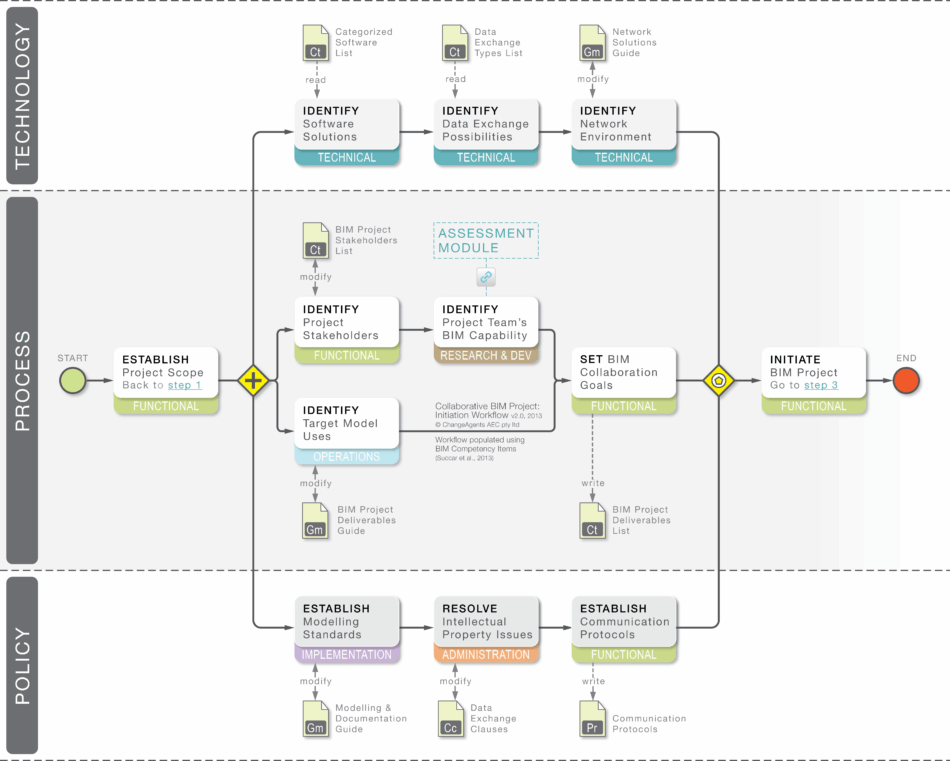
21. Competency-based Workflow
The Competency-based workflow uses BIM competency items from across several Competency Sets to clarify a specific process – how to initiate a collaborative BIM project.
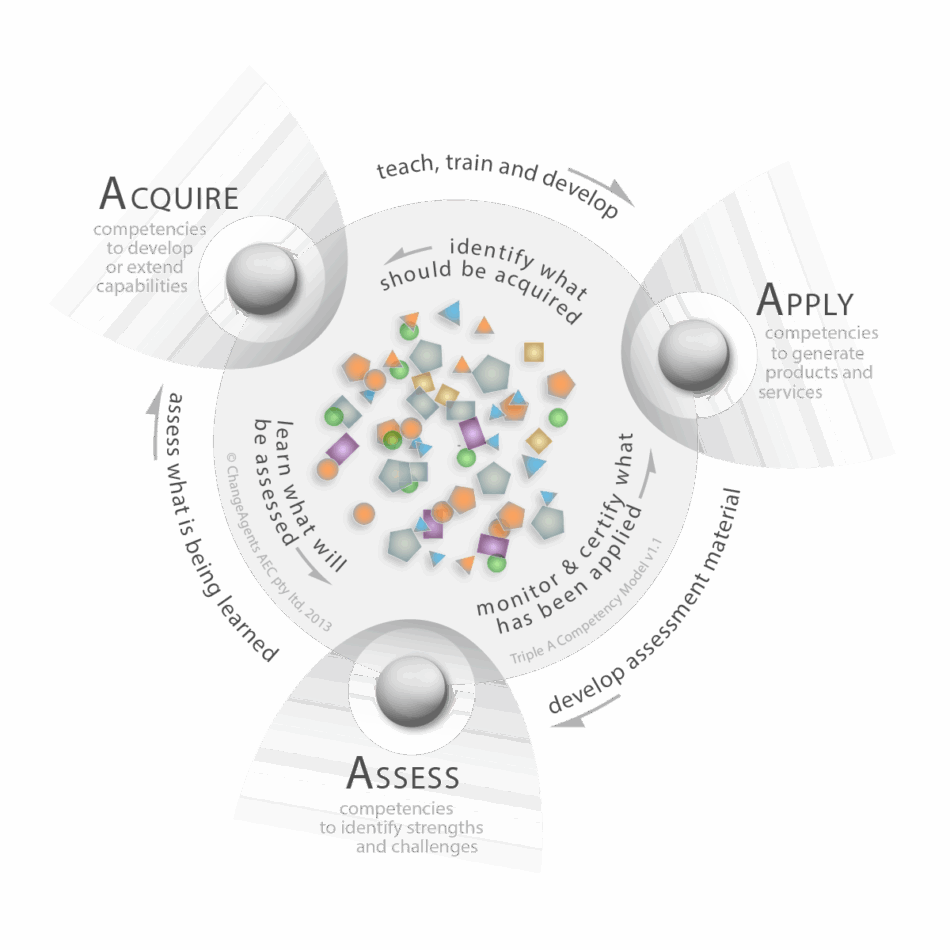
20. Triple A Competency Model
The Triple A Competency Model is a knowledge engine which uses structured BIM competency items to perform three complementary actions: competency Acquisition, competency Application and competency Assessment.
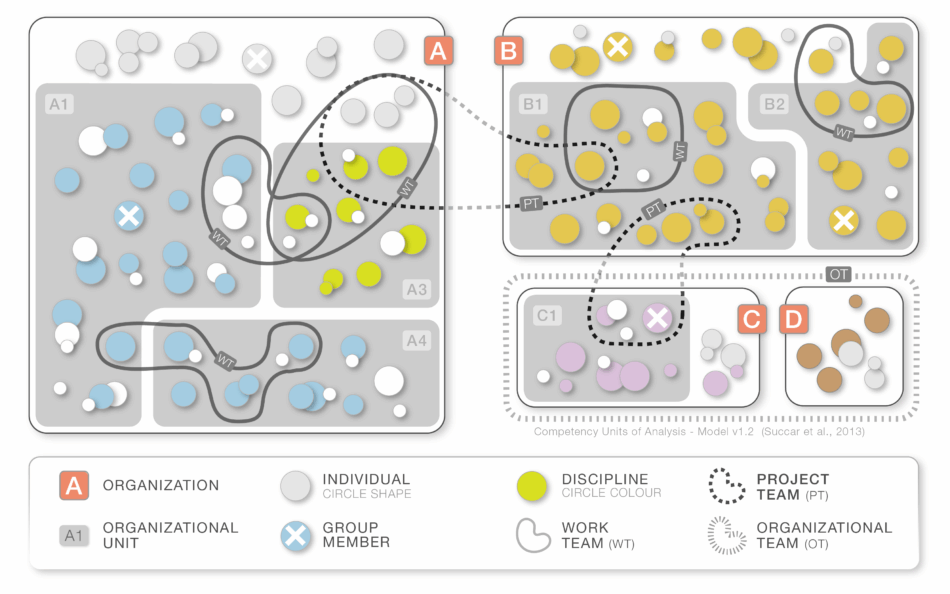
19. Competency Units of Analysis
This Competency Units of Analysis is a conceptual model identifies several units for the purposes of competency analysis.
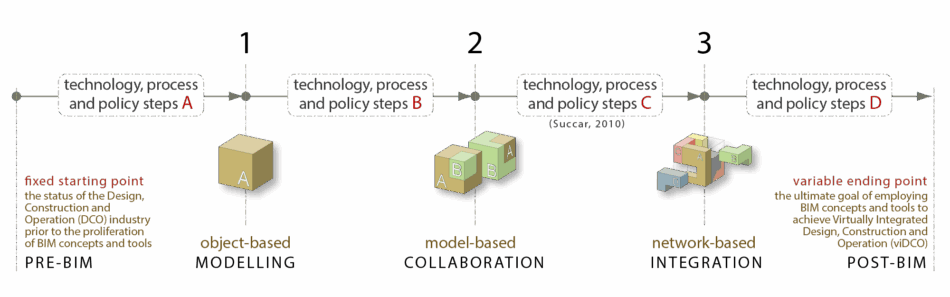
3. BIM Stages
The BIM Stages Model identifies pre-BIM, three BIM Capability Stages and the ultimate vision from implementing BIM.
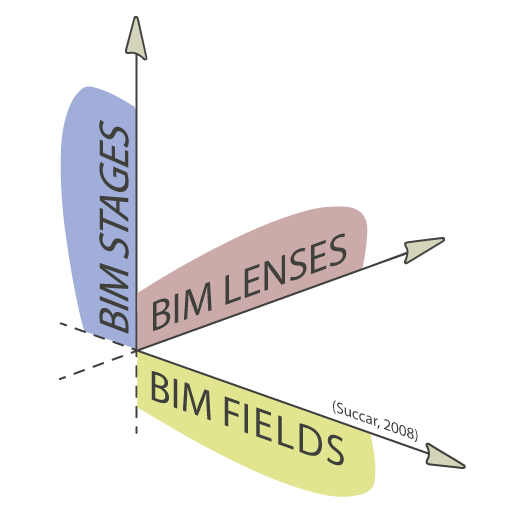
1. The Tri-Axial Framework
This conceptual model explains the multi-dimensional relationship between the three main components of the BIM framework: BIM fields of activity identifying domain players, their requirements and deliverables; BIM stages delineating minimum capability benchmarks; and BIM lenses providing the depth and breadth of enquiry necessary to identify, assess and qualify BIM fields and BIM stages.