This conceptual model (Figure 1) identifies nine BIM player groups (industry stakeholders) distributed across three BIM Fields (technology, process and policy) as defined within the BIM Framework. The nine player groups are: policy makers, educational institutions, construction organisations, individual practitioners, technology developers, technology service providers, industry associations, communities of practice, and technology advocates.
38. Conceptual Reactor
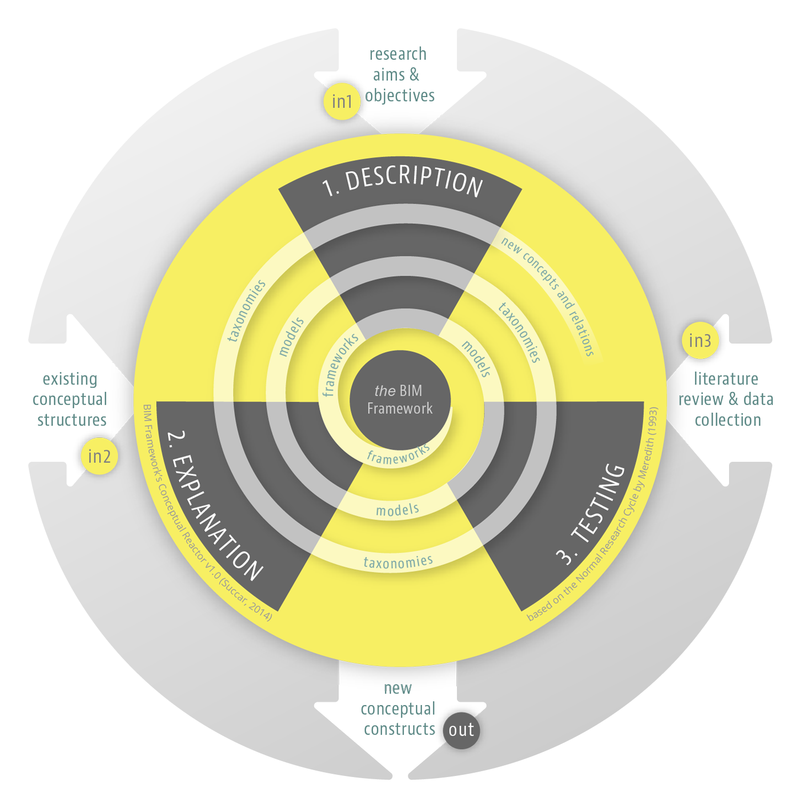
The BIM Framework Conceptual Reactor explains how existing conceptual constructs – terms, classifications, taxonomies, models and frameworks – are used to identify, explain and test new constructs.
37. Model Uses – Conceptual Structures
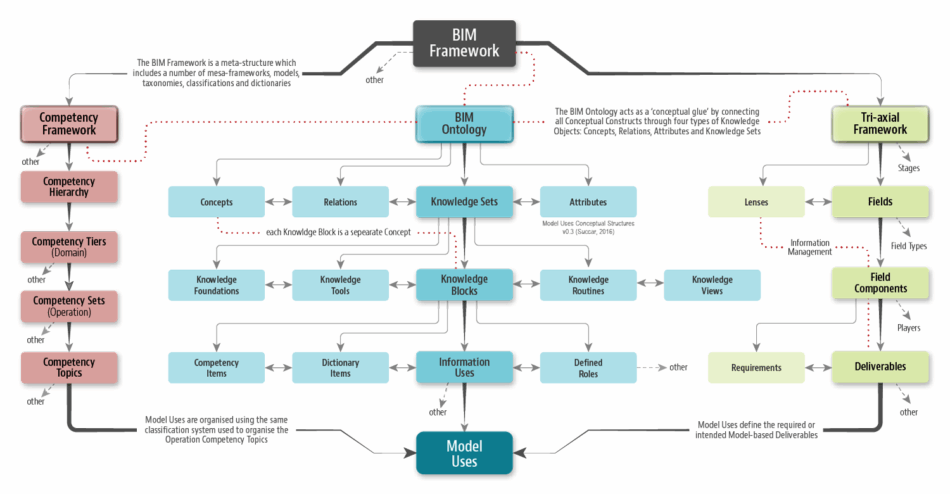
The conceptual hierarchy provided clarify how Model Uses are derived through three different conceptual routes: the Tri-Axial Framework, Competency Framework, and BIM Ontology.
36. BIM Ontology
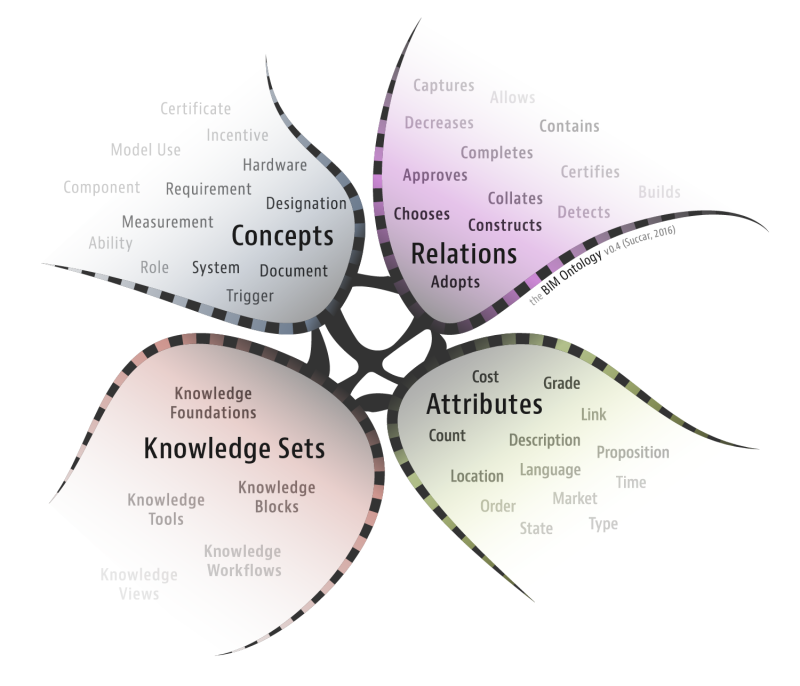
The BIM ontology is an informal, semi-structured, conceptual ‘domain ontology’ used for knowledge acquisition and communication between people. It is intended to represent knowledge interactions (push/pull) between BIM players, their deliverables and requirements, and facilitate the validation of conceptual models.
35. Point of Adoption
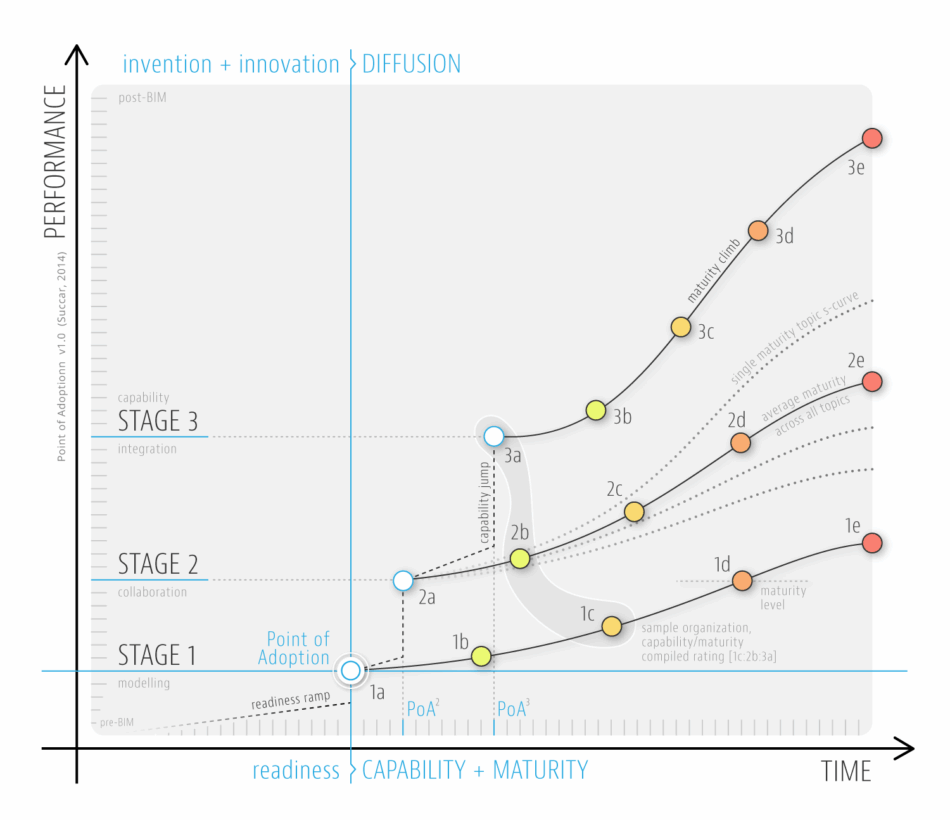
The Point of Adoption Model highlights how capability stages and maturity levels are used to assess/facilitate BIM implementation within organization and – in combination with other Framework parts – BIM diffusion across markets.
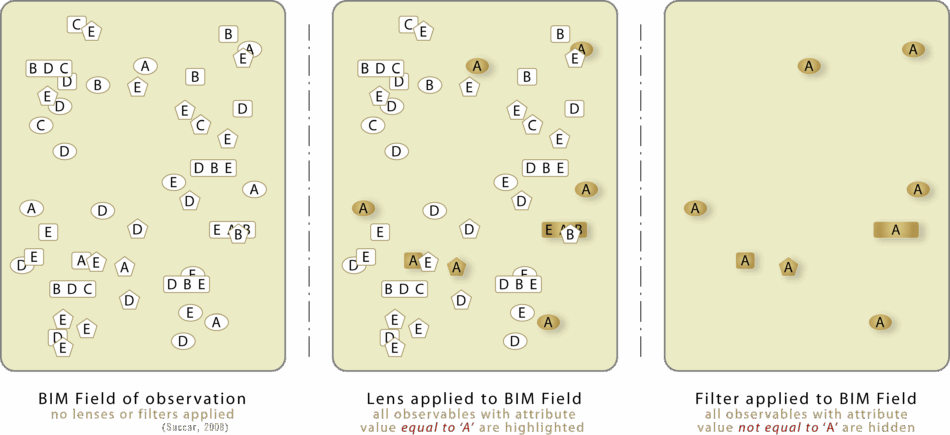
33. Difference between Lenses and Filters
Lenses and Filters are investigative tools of enquiry and domain analysis allowing the discovery of concepts and relations. The difference between (BIM) Lenses and Filters can be summarised as such: Lenses are additive and are deployed from the ‘investigator’s side’ of BIM Field observation while Filters are subtractive and are deployed from the ‘data side’. Lenses highlight observables that meet …
32. Relevance Metric
NBP Relevance Index – Sample Chart v0.2 (Full Size Image – 102Kb) The Relevance Metric is primarily used to compare the relevance (impact, currency and authority) of one entity relative to another, or relative to a specific stakeholder group. For example the Noteworthy BIM Publication Relevance Index (NBP-RI) compares the relevance of an NBP relative to other NBPs within and …
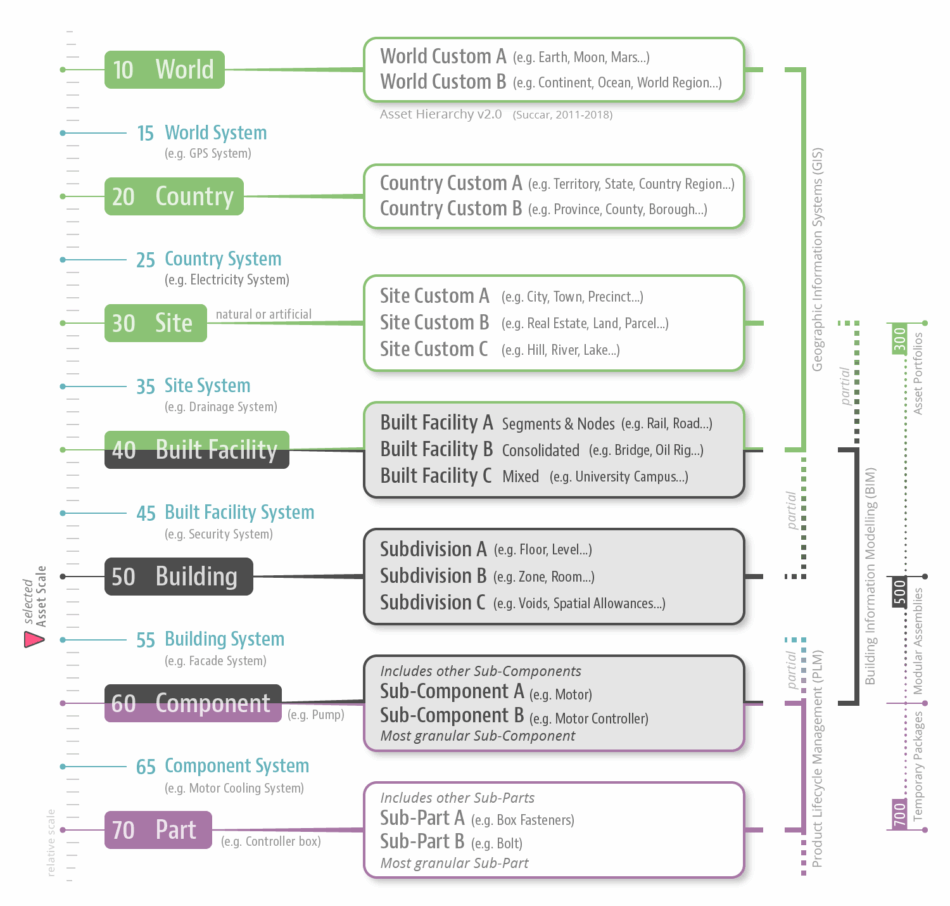
30. Asset Hierarchy
The Asset Hierarchy model organises Physical Deliverables/Assets by relative scale
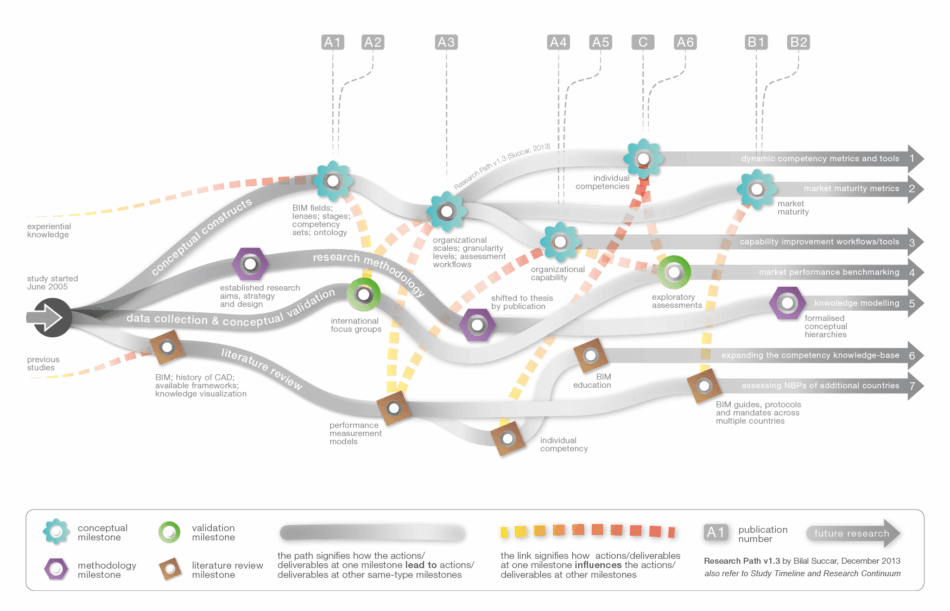
29. Research Path
The Research Path (Succar, 2013) identifies the major milestones along four research sub-paths: literature review, research methodology, conceptual development and data collection.
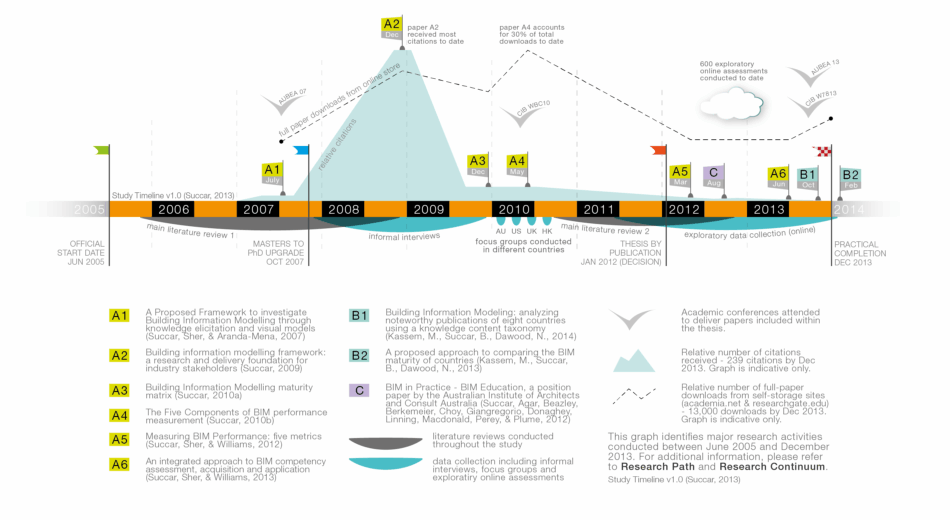
28. Research Timeline
The Research Timeline graph identifies literature reviews, data collection efforts and published papers (including citations and downloads) between June 2005 and December 2013.
10. BIM Maturity Index
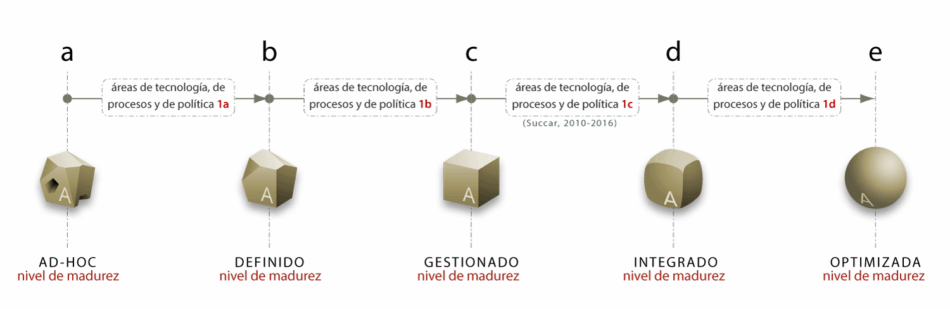
The BIM Maturity Index (BIMMI) is a conceptual model depicting five distinct Maturity Levels: (a) Initial/ Ad-hoc, (b) Defined, (c) Managed, (d) Integrated and (e) Optimized.
8. Project Lifecycle Phases
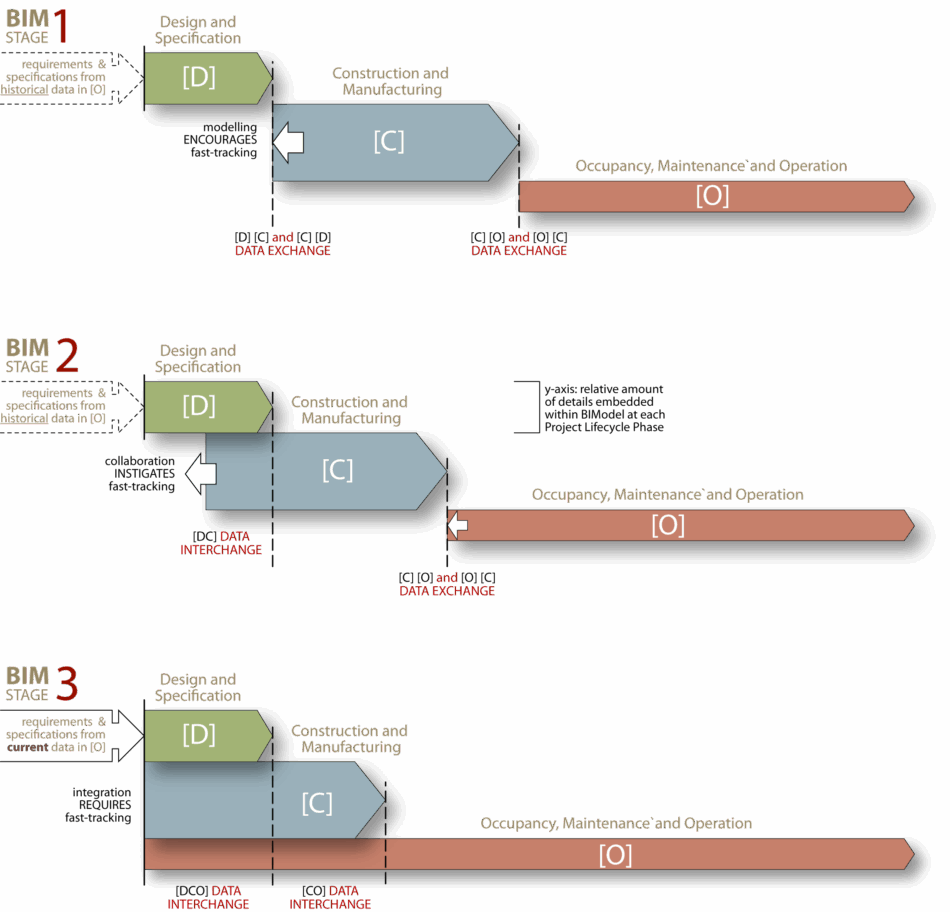
Construction projects pass through three major lifecycle phases: Design [D], Construction [C] and Operations [O]. These phases are also subdivided into sub-phases which are in turn further subdivided into activities, sub-activities and tasks
3. BIM Stages
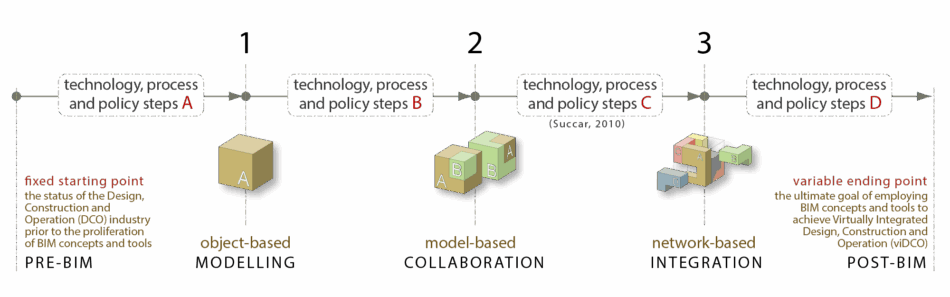
The BIM Stages Model identifies pre-BIM, three BIM Capability Stages and the ultimate vision from implementing BIM.