
Jump
This numbered Frameworks Page covers a single Visual Knowledge Model (VKM). Refer to Tags at the bottom for content classification and source publication if any. The page may be updated to connect with newer Frameworks Pages. The number is for pages, not for content.
Published on August 5, 2026 | Last Updated on August 5, 2026
This post elaborates on two components of the Lifecycle Information Transformation and Exchange framework (LITE, Succar & Poirier, 2020): Information Gates control how information flows through an asset's lifecycle, while Information Actions describe the activities that constitute each flow. The two components are overlaid in the illustration below and discussed together, as neither can be fully understood without the other.
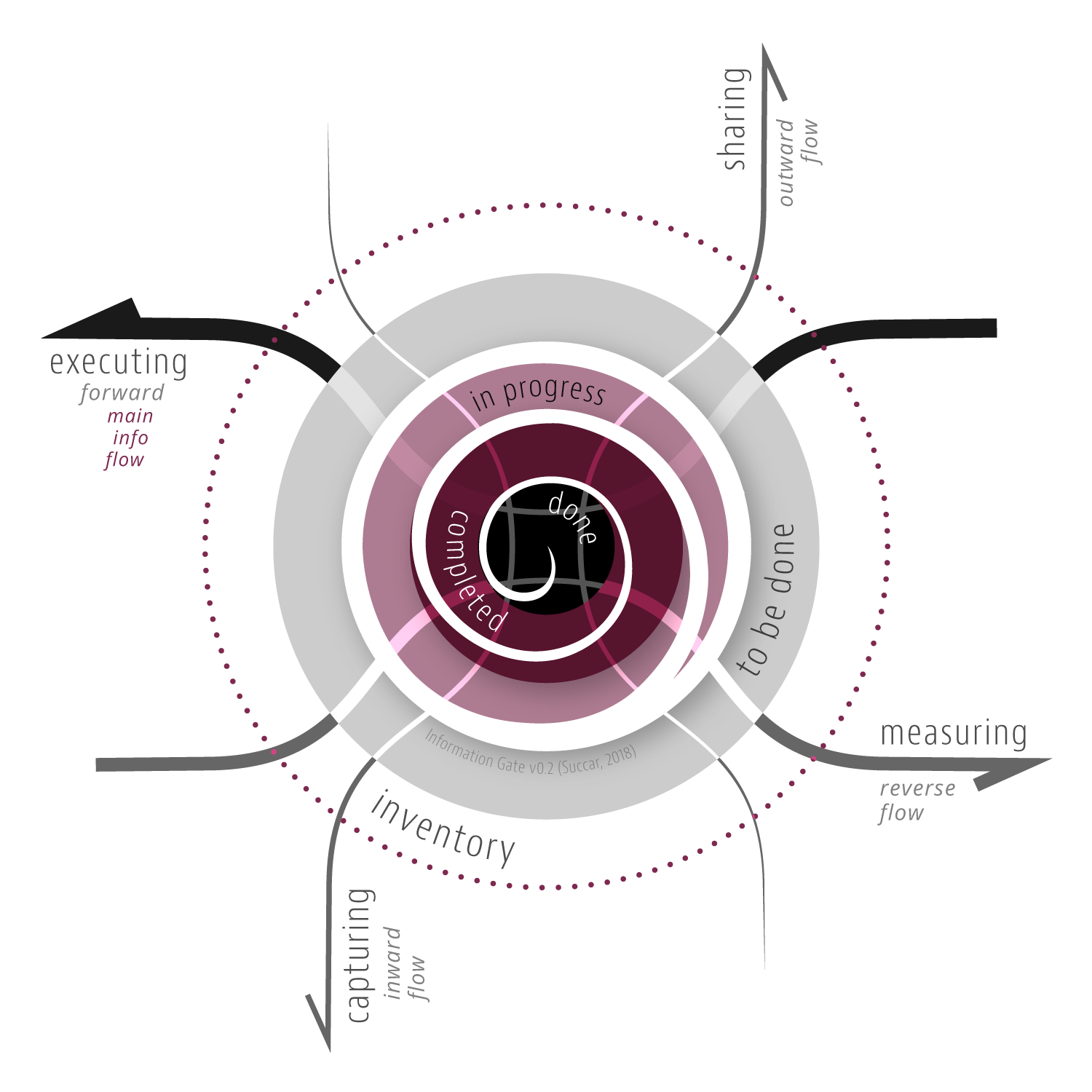
Figure 1. Information Gate Model v0.2 at OScale 8, GLevel 2
1. Information Flows and their Actions
The LITE framework describes information as flowing in four directions around the Information Cycle, and names the clusters of activities travelling in each direction:
- Forward Flow (counter-clockwise) represents the primary transformation and exchange of information, where Purposes influence the definition of Deliverables, and Deliverables influence the definition of the Resources and Methods needed to deliver them. Clusters of activities flowing forward are Execution Actions (e.g. specifying, generating, delivering, or operating);
- Reverse Flow (clockwise) represents the checking of what is actual against what was targeted. Clusters of activities flowing in reverse are Measurement Actions (e.g. confirming, verifying, validating, or inspecting);
- Inward Flow (towards the centre of the Cycle) represents the collation of information. Clusters of activities flowing inwards are Capturing Actions (e.g. recording, integrating, or learning); and
- Outward Flow (away from the centre) represents the release of information. Clusters of activities flowing outwards are Sharing Actions (e.g. issuing, publishing, or teaching).
Execution, Measurement, Capturing, and Sharing are not four parts of one activity. They are four types of Information Action, each defined by its direction of travel. Table 2 of Succar and Poirier (2020) lists the Forward Execution Actions and Reverse Measurement Actions between all eight Information Milestones, and pairs each one with its counterpart: F2–3 (define the Digital Deliverables needed for the Expected Physical Deliverables) is paired with R3–2 (verify that those defined Digital Deliverables are adequate).
2. The Information Gate
Information Gates are the mechanisms controlling Information Flows. They coincide with eight Information Milestones, and each gate governs what information passes from one milestone to the next. Where a Milestone marks a state of information (e.g. Expected Physical Deliverables at Milestone 2), the Gate at that milestone is the decision point determining whether information is permitted to proceed.
2.1. What gates check
Information flows are verified and validated at Information Gates through manual or automated checks, whether the information is in digital or physical form. These include checks for accuracy, timeliness, completeness, and – most importantly – alignment with Defined Purposes. The fourth check (alignment) deserves emphasis, as it is the one most frequently omitted in practice. Information may be accurate, timely, and complete while remaining misaligned with the reason it was requested in the first place. A gate that tests only the first three permits well-formed information of no or minimal benefit to pass unchallenged. Gates are also where financial controls, security reviews, and legal checks are applied.
2.2. How gates control flow
Similar to how flow gates on a canal can slow, restrict, or divert water flow, an Information Gate may slow, restrict, or divert information flow. It may slow the flow (e.g. by holding a submission pending clarification); restrict it to particular Information Actors based on their roles and permission levels; or divert it along a different Information Route.
Diversion is where the Gate connects to two other LITE framework components. A gate may divert a flow onto a shorter Information Route (Routes II–III), or it may permit an Information Shortcut, bypassing one or more milestones altogether.
2.3. Degree of Automation
Gate checks may be conducted at four Degrees of Automation (DoA), consistent with the scale applied to activities and tasks generally:
- Computer-assisted: the check is performed by a human actor with machine assistance (e.g. a reviewer using a model-checking tool);
- Automated: the check is instigated by an actor but performed by a machine;
- Automatic: the check is performed by a machine following a pre-programmed initiation or actuation event; and
- Autonomous: the check is performed by a machine actor on decision heuristics and/or sensor data, without human intervention, typically drawing on Artificial Intelligence and – more specifically – Machine Learning and Deep Learning.
3. Activity Units and Activity States
An Activity Unit (ACU) is a collation of Information Actions of different types, treated as a single unit of planning, progression, and reporting. The Activity States Index applies to Activity Units and has five States:
- Inventory: an unallocated collation of generic activities to be selected from;
- To be Done (or Backlog, in Agile terminology): selected to be completed within the current Information Cycle or Loop, but not yet started – awaiting the assignment of resources, the allocation of time, or the completion of activities on which it depends;
- In Progress: started, and heading towards completion;
- Completed: the work of the Action itself is finished. An Activity Unit reaches Completed when its Execution Action is Completed – that is, when the forward work is finished but not yet verified; and
- Done: the Activity Unit is closed – its Execution Action is Completed and its coupled Measurement Action has verified the result.
Activity States are derived from, and extend beyond, the Agile approach to task management (Beck et al., 2001), incorporating relevant concepts from Scrum (Schwaber & Sutherland, 2020) and Kanban (Anderson, 2010).
The extension is necessary because Agile states describe work items in a development backlog, not information transforming across an asset lifecycle. Where Scrum organises work into uniform Sprints, LITE subdivides them by the Information Loop: a Design Sprint corresponds to the Short Information Loop (Milestone 6 back to Milestone 3, indicating a design iteration); a Delivery Sprint to the Long Information Loop (Milestone 7 back to Milestone 2, indicating a delivery iteration); and a Lifecycle Sprint to the Full Information Loop (Milestone 8 back to Milestone 1, indicating reuse, refurbishment, or replacement). Sprint durations are variable rather than fixed, to account for varying Asset Scales and Degrees of Automation.
3.1. Note on CDE States
The five Activity States do not conflict with information container states - Work in Progress, Shared, Published, and Archived - as defined in ISO 19650-1: 2018. The Activity State describes the condition of work, whether an Activity Unit is unallocated (stored in an inventory of common activities), added to the backlog for a specific sprint (can be started), has started, is complete or has closed. A Common Data Environment (CDE) state, however, is the condition of an Information Container, whether it is being worked on, made available to others, authorised for a particular use, or retained as a record. In essence, the LITE approach focuses on assets and the activities associated with them, whereas ISO 19650 focuses on information container states and their associated permissions.
References
Anderson, D. J. (2010). Kanban: Successful evolutionary change for your technology business. Blue Hole Press.
Beck, K., Beedle, M., van Bennekum, A., Cockburn, A., Cunningham, W., Fowler, M., … Thomas, D. (2001). Manifesto for agile software development. https://agilemanifesto.org (last accessed 30 July 2026)
Schwaber, K., & Sutherland, J. (2020). The Scrum Guide: The definitive guide to Scrum – the rules of the game. https://scrumguides.org (last accessed 30 July 2026)
Succar, B., & Poirier, E. (2020). Lifecycle information transformation and exchange for delivering and managing digital and physical assets. Automation in Construction, 112, 103090. Download from here.
Cite as: BIMe Initiative (2026), '46. LITE Information Gates & Activity Units', https://bimexcellence.org/frameworks/46-lite-information-gates-activity-units/. First published 5 August 2026. Viewed 26 October 2026