Jul. 25, 2017

Welcome to the Frameworks, Models, and Taxonomies archive. Each page covers a single visual knowledge model (VKM) that is regularly updated. These VKMs are numbered for easy reference although numbering does not indicate precedence.
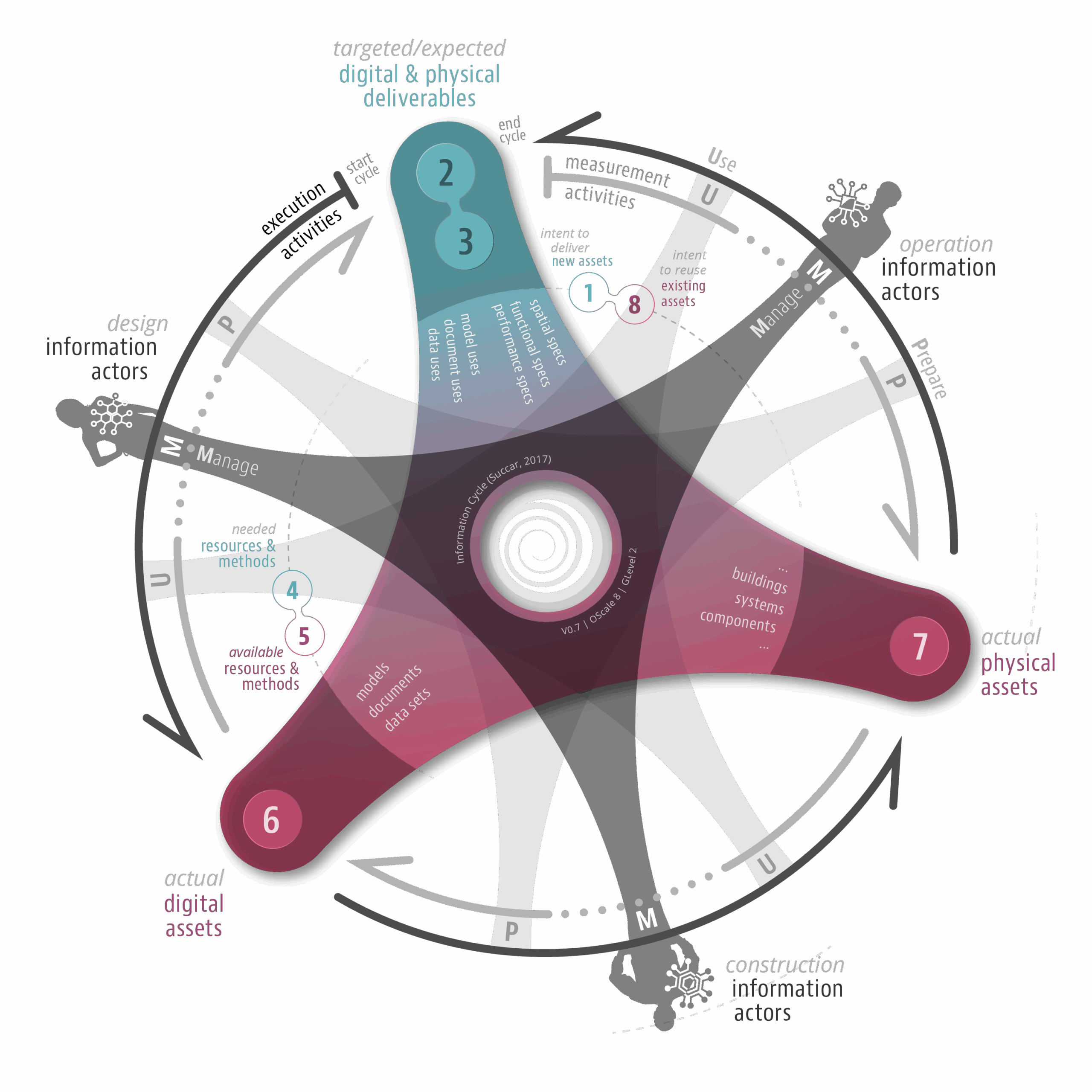
The Information Cycles employs the three Project Lifecycle Phases – Design, Construction, and Operation (Succar, 2009) – to identify Information Actors and their high-level Information Actions connecting several Information Milestones within the Lifecycle Information Transformation and Exchange (LITE) framework (Succar and Poirier, 2020).
Jul. 17, 2017
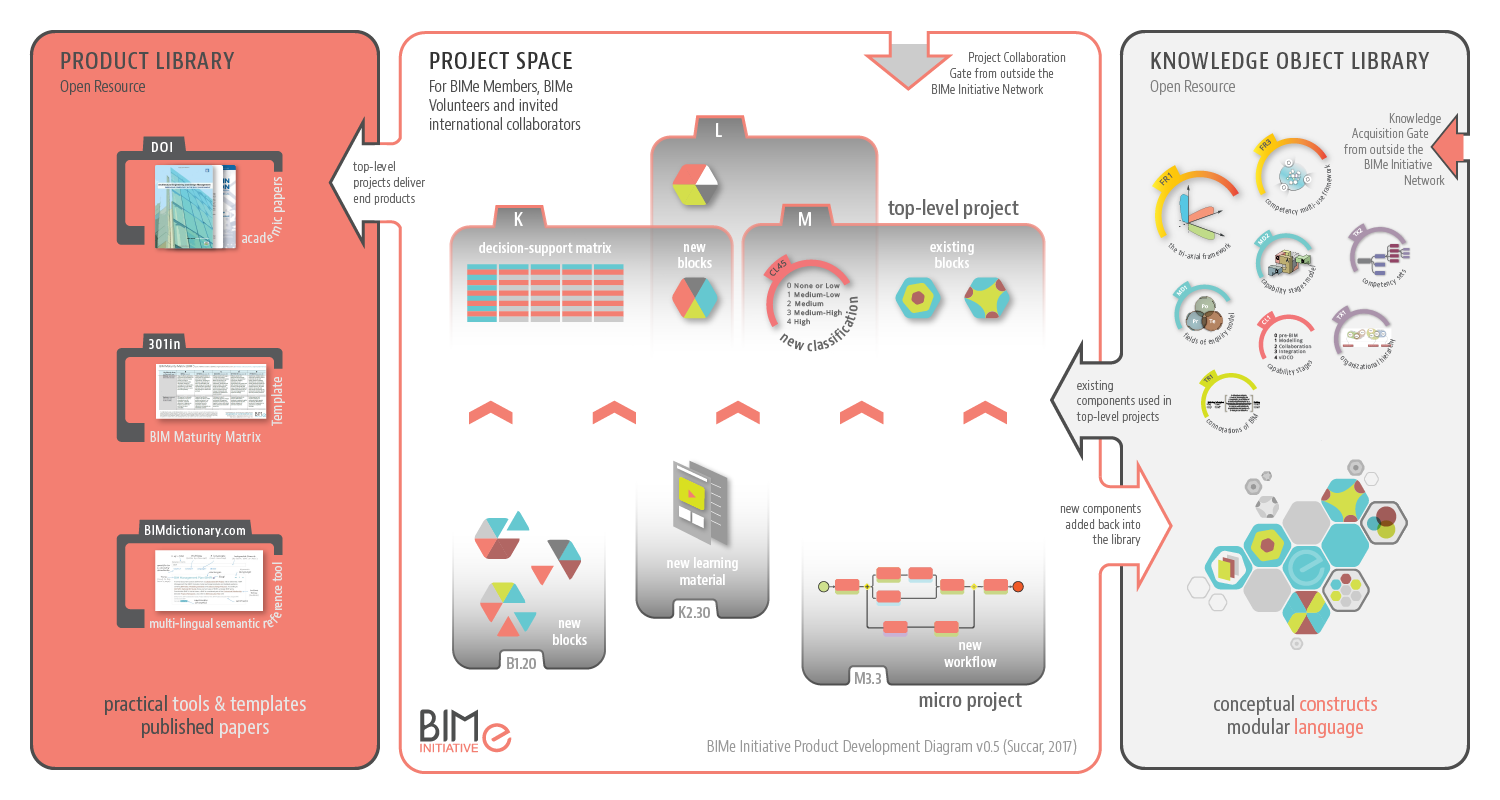
43. Product Development Diagram
The Product Development Diagram illustrates how to deliver a BIMe Initiative Product – a published guide or a software application.
Apr. 14, 2017
42. BIMe Initiative Knowledge Structure
The Knowledge Structure is composed of five Knowledge Sets forming the bases for all BIMe Initiative projects, activities and deliverables.

Aug. 06, 2016
41. Macro Diffusion Responsibilities
This conceptual model (Figure 1) identifies nine BIM player groups (industry stakeholders) distributed across three BIM Fields (technology, process and policy) as defined within the BIM Framework. The nine player groups are: policy makers, educational institutions, construction organisations, individual practitioners, technology developers, technology service providers, industry associations, communities of practice, and technology advocates.
Jun. 20, 2016
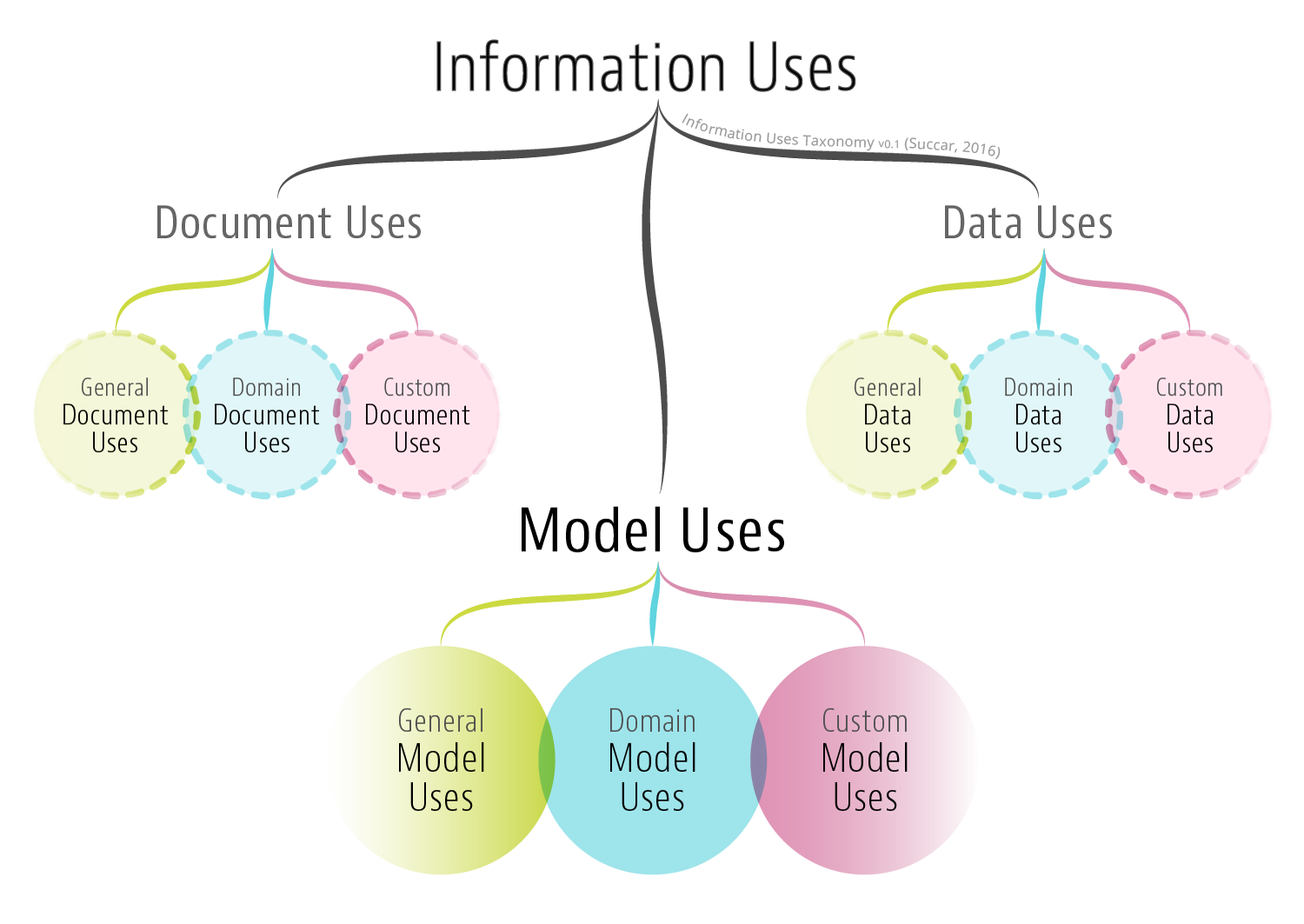
40. Information Taxonomy
Updated Feb 20, 2020, to align with Paper A11 – original June 20, 2016 (download), modified Nov 29 and Jun 20, 2019. The Information Taxonomy (previously Project Information Taxonomy) extends the Modular Requirements Clarification Language first introduced in Paper A10. The taxonomy currently includes concepts/terms to be used in defining information requirements within mission-critical documentation (e.g. within an Employer’s Information Requirements
Mar. 24, 2016
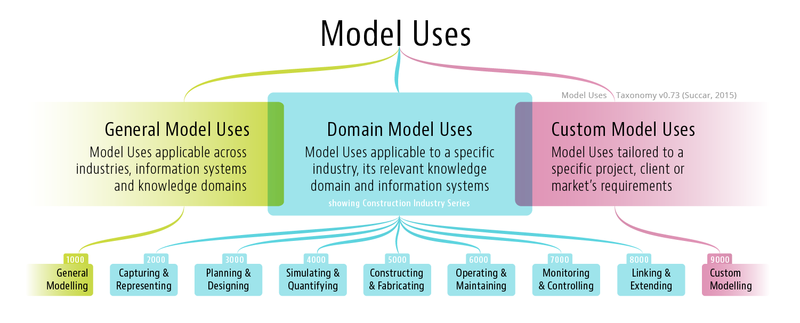
39. Model Uses Taxonomy
Figure 1. Model Uses Taxonomy The Model Uses Taxonomy organises Model Uses into a tiered structure that allows: (a) collation of Model Uses from across different industries; (b) close alignment with the Competency Taxonomy (Succar et al., 2013 – http://bit.ly/BIMpaperA6); (c) custom use-cases for unique projects; and (d) future expansion towards whole of life cycle classifications. The Model Uses Taxonomy
Oct. 06, 2015
38. Conceptual Reactor
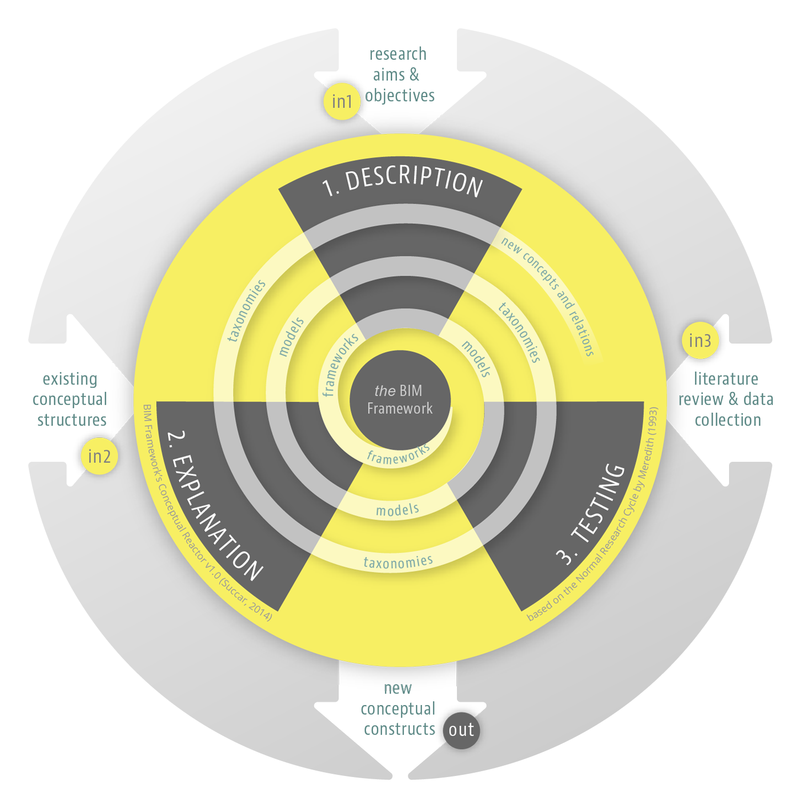
The BIM Framework Conceptual Reactor explains how existing conceptual constructs – terms, classifications, taxonomies, models and frameworks – are used to identify, explain and test new constructs.
Sep. 09, 2015
37. Model Uses – Conceptual Structures
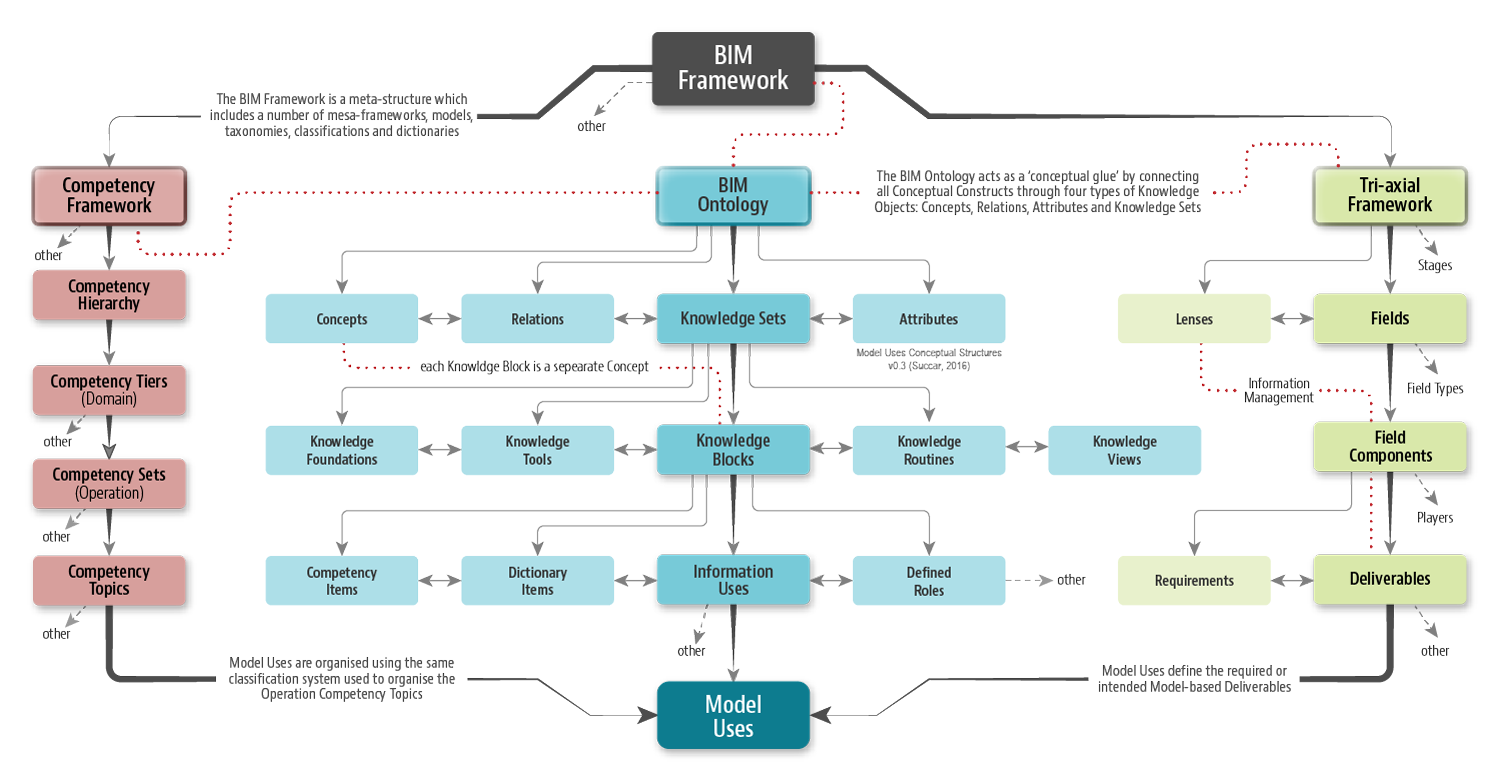
The conceptual hierarchy provided clarify how Model Uses are derived through three different conceptual routes: the Tri-Axial Framework, Competency Framework, and BIM Ontology.
Aug. 16, 2015
36. BIM Ontology
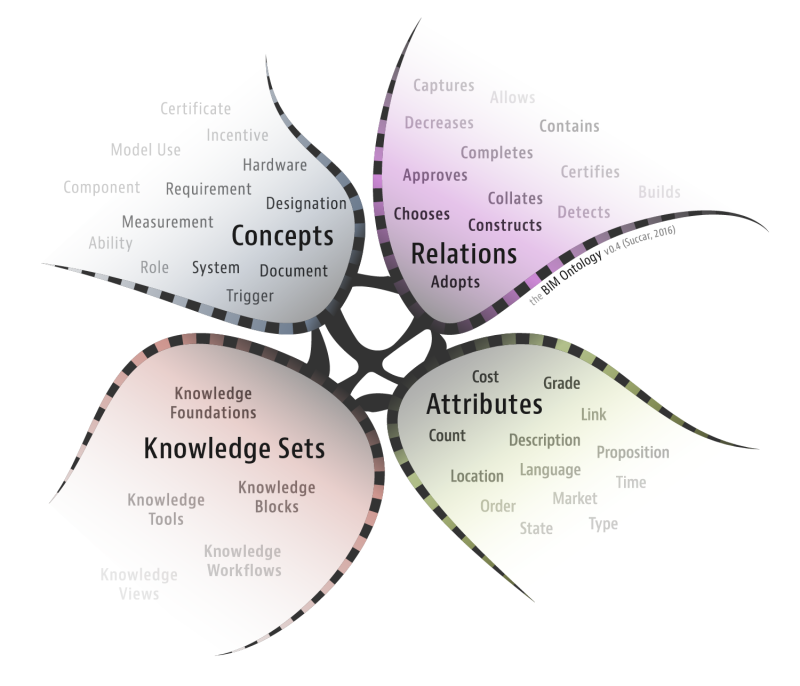
The BIM ontology is an informal, semi-structured, conceptual ‘domain ontology’ used for knowledge acquisition and communication between people. It is intended to represent knowledge interactions (push/pull) between BIM players, their deliverables and requirements, and facilitate the validation of conceptual models.
Jul. 26, 2015
35. Point of Adoption
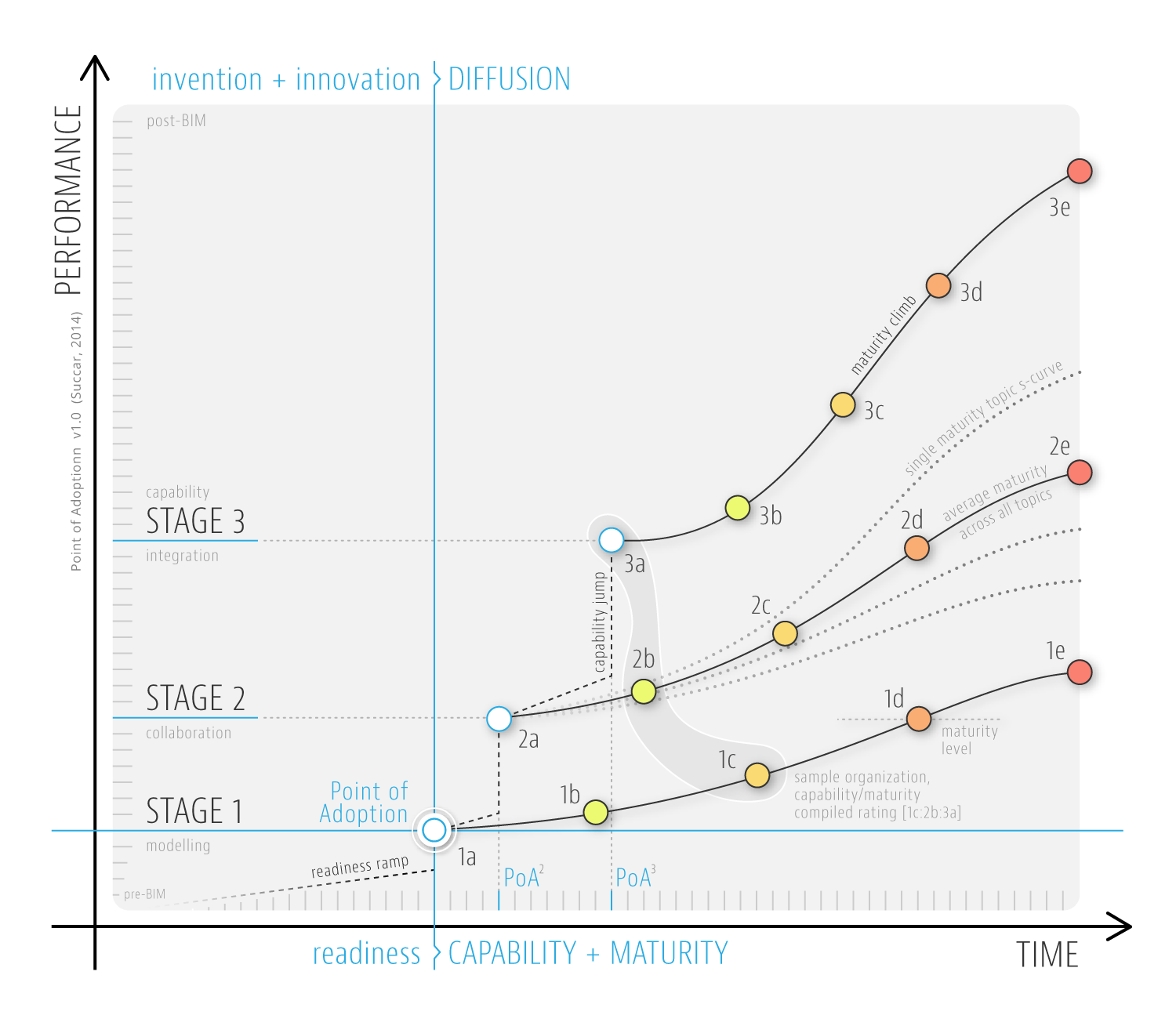
The Point of Adoption Model highlights how capability stages and maturity levels are used to assess/facilitate BIM implementation within organization and – in combination with other Framework parts – BIM diffusion across markets.
May. 27, 2015
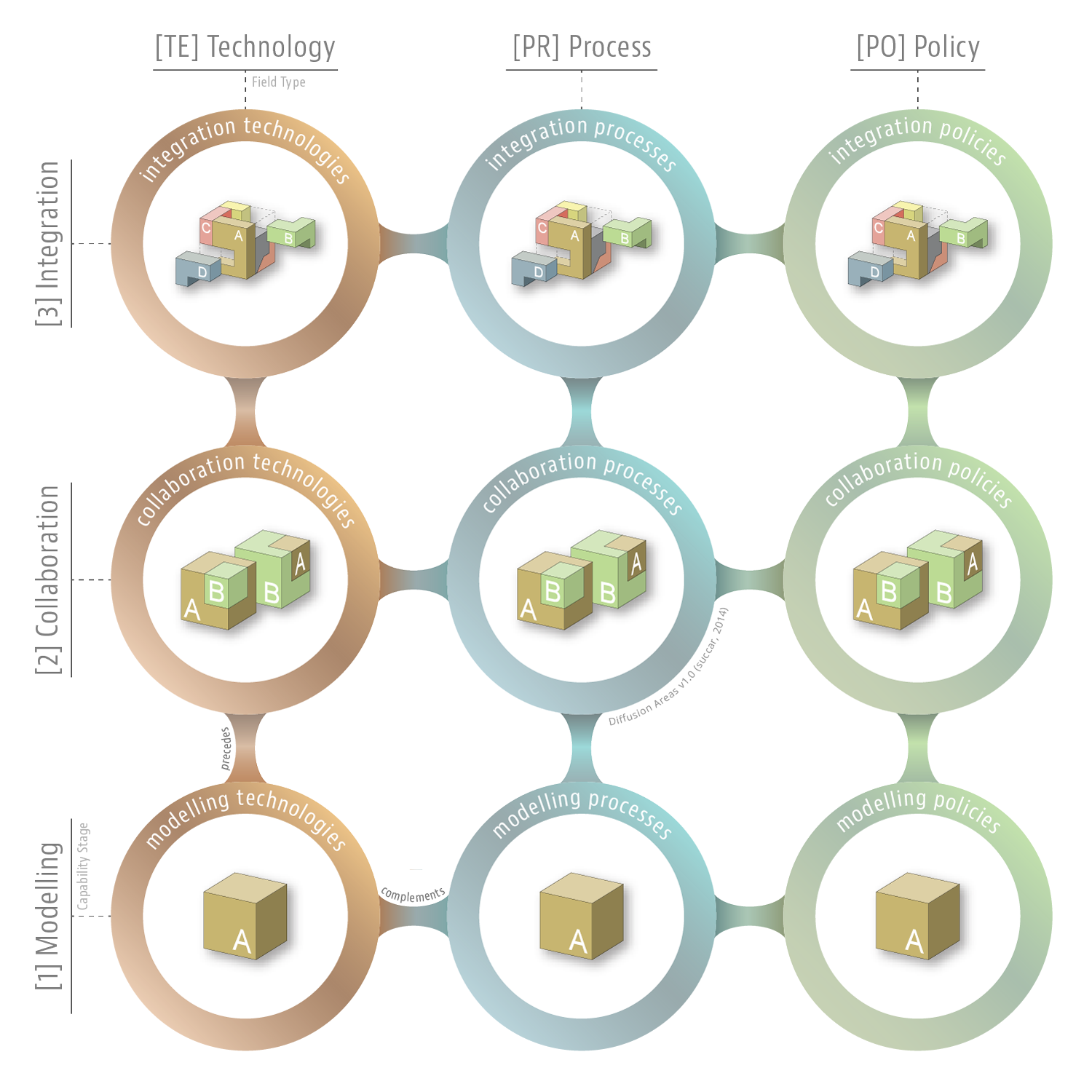
34. Diffusion Areas
This Diffusion Areas model/matrix/chart clarify how BIM Field types interact with BIM Capability Stages to generate nine areas for targeted BIM diffusion analysis and BIM diffusion planning.
May. 13, 2015
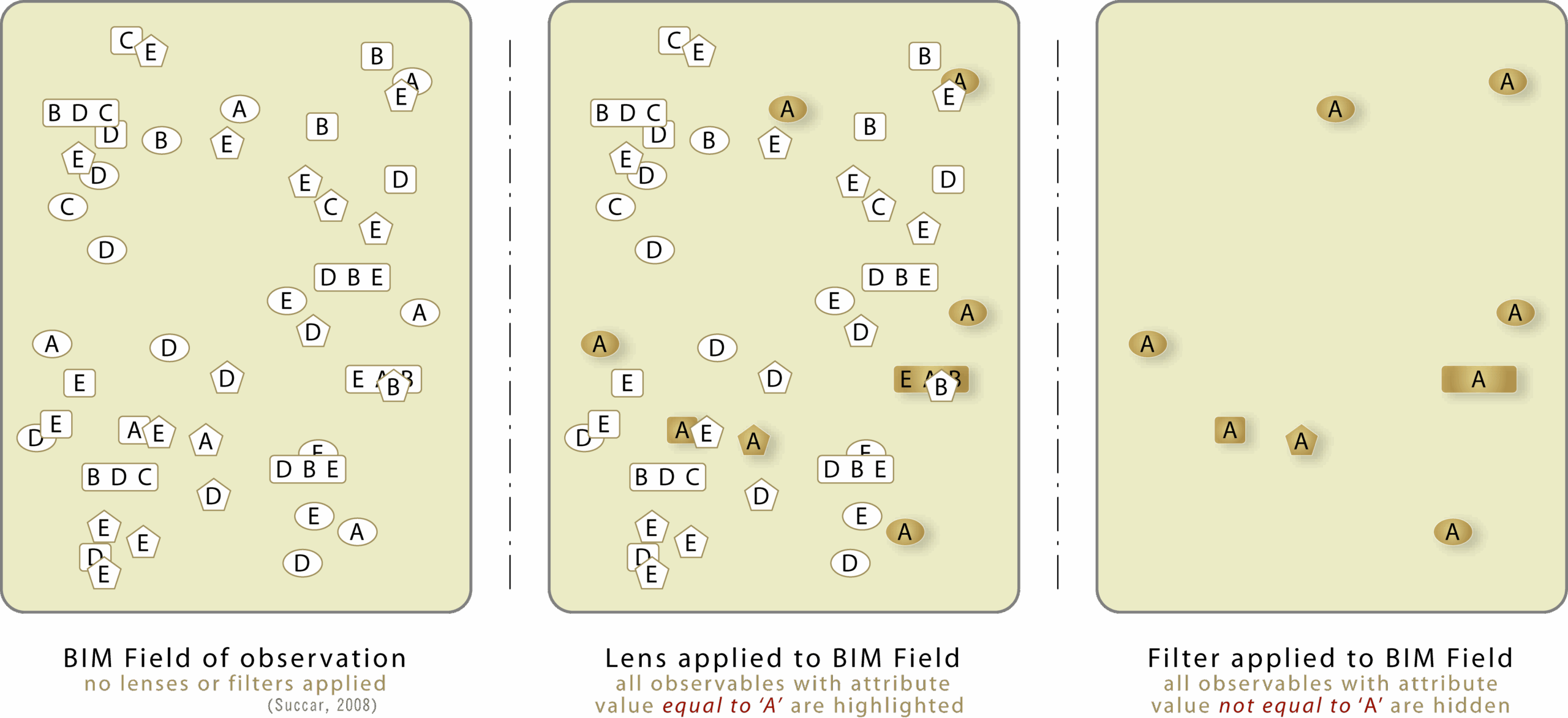
33. Difference between Lenses and Filters
Lenses and Filters are investigative tools of enquiry and domain analysis allowing the discovery of concepts and relations. The difference between (BIM) Lenses and Filters can be summarised as such: Lenses are additive and are deployed from the ‘investigator’s side’ of BIM Field observation while Filters are subtractive and are deployed from the ‘data side’. Lenses highlight observables that meet

Jan. 08, 2015
32. Relevance Metric
NBP Relevance Index – Sample Chart v0.2 (Full Size Image – 102Kb) The Relevance Metric is primarily used to compare the relevance (impact, currency and authority) of one entity relative to another, or relative to a specific stakeholder group. For example the Noteworthy BIM Publication Relevance Index (NBP-RI) compares the relevance of an NBP relative to other NBPs within and
Jan. 06, 2015
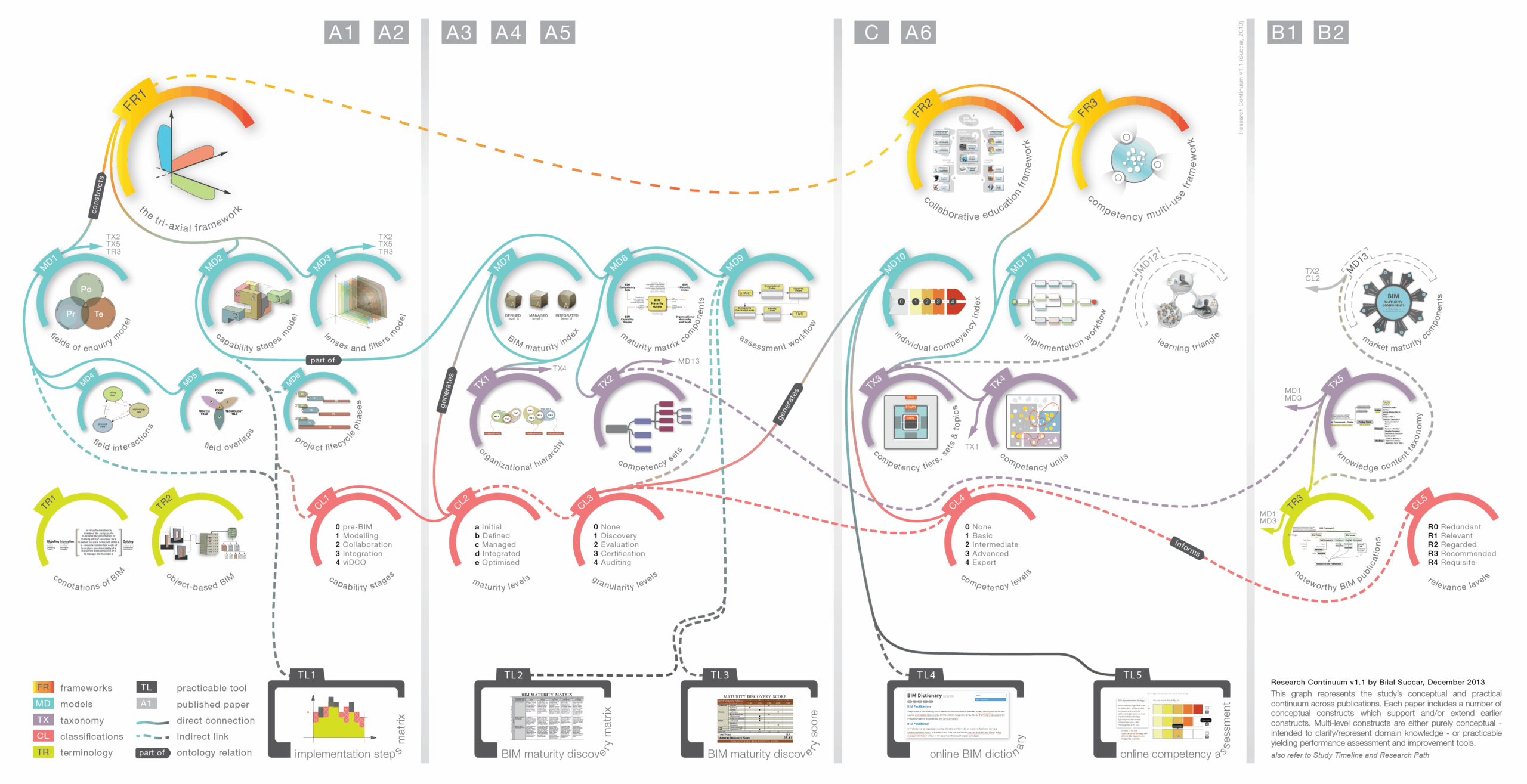
31. Research Continuum
Research Continuum v1.1 (partial, showing sample relations – click to enlarge) The Research Continuum v1.1 represents a network of conceptual and practical deliverables across a number of papers till December 2013 (model to be updated in 2016). The continuum highlights how each paper delivers a number of conceptual constructs which either extend earlier constructs/tools or support the development of new ones.
Dec. 01, 2014
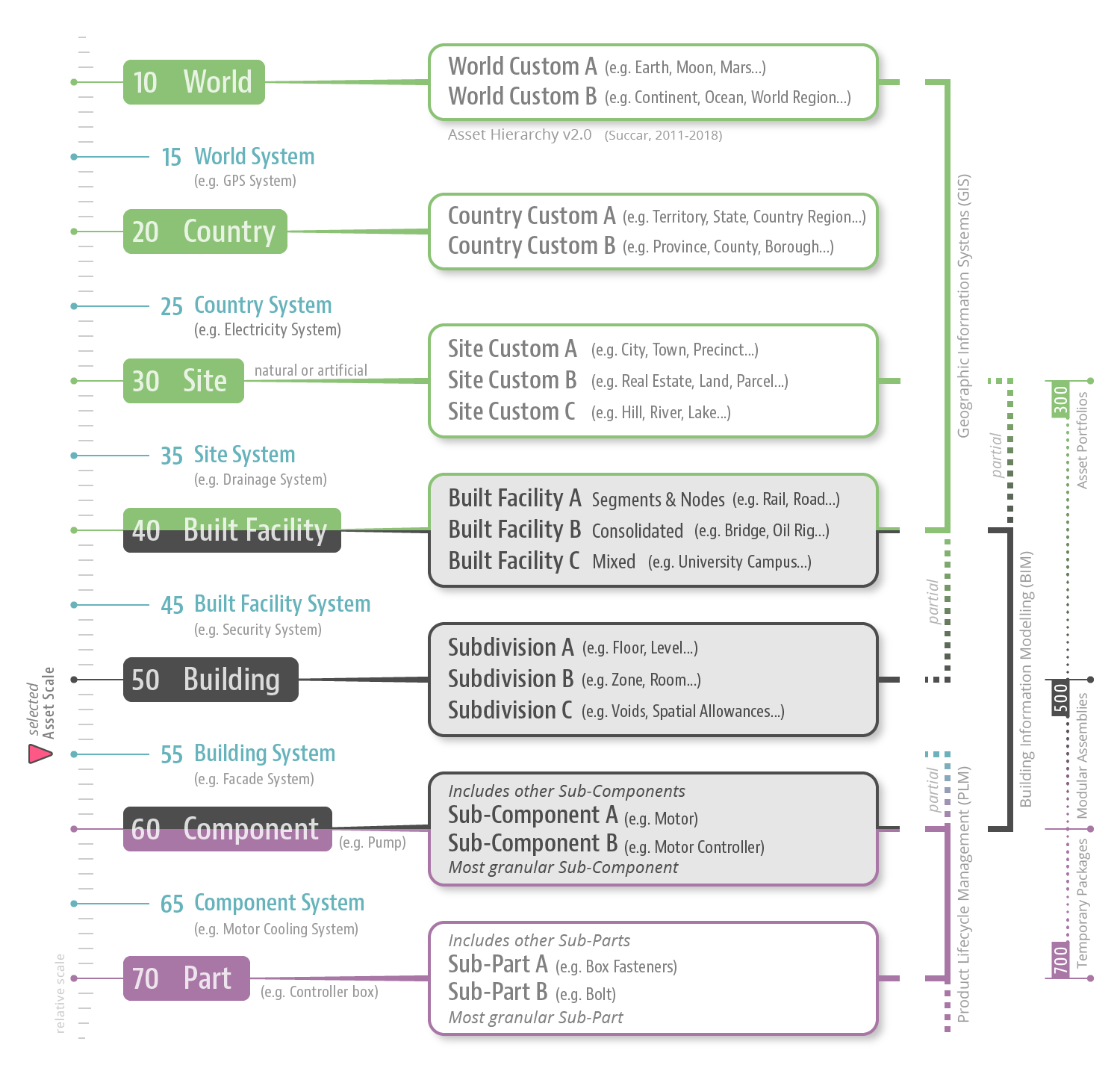
30. Asset Hierarchy
The Asset Hierarchy model organises Physical Deliverables/Assets by relative scale
Sep. 10, 2014
29. Research Path
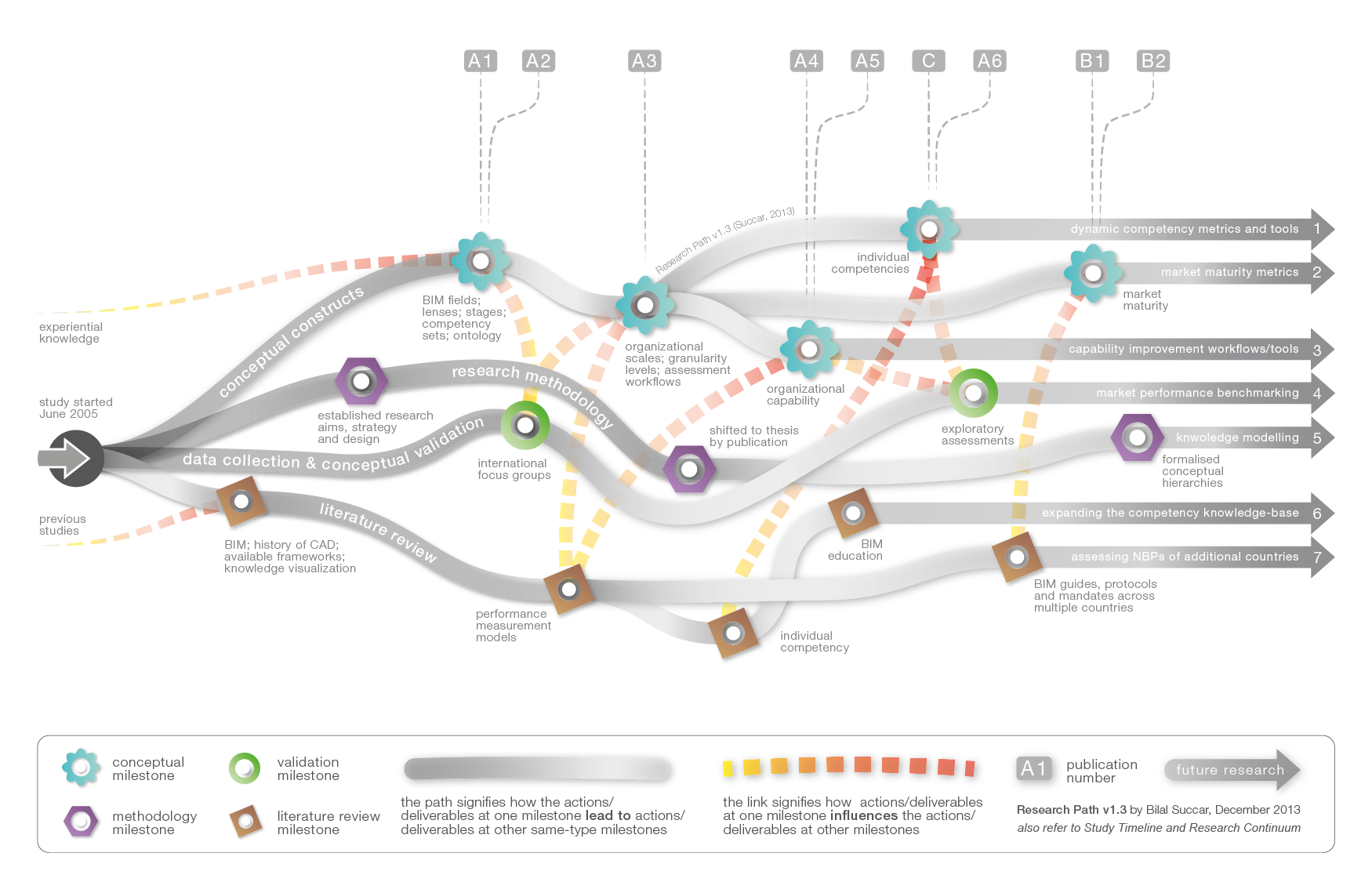
The Research Path (Succar, 2013) identifies the major milestones along four research sub-paths: literature review, research methodology, conceptual development and data collection.
Aug. 27, 2014
28. Research Timeline
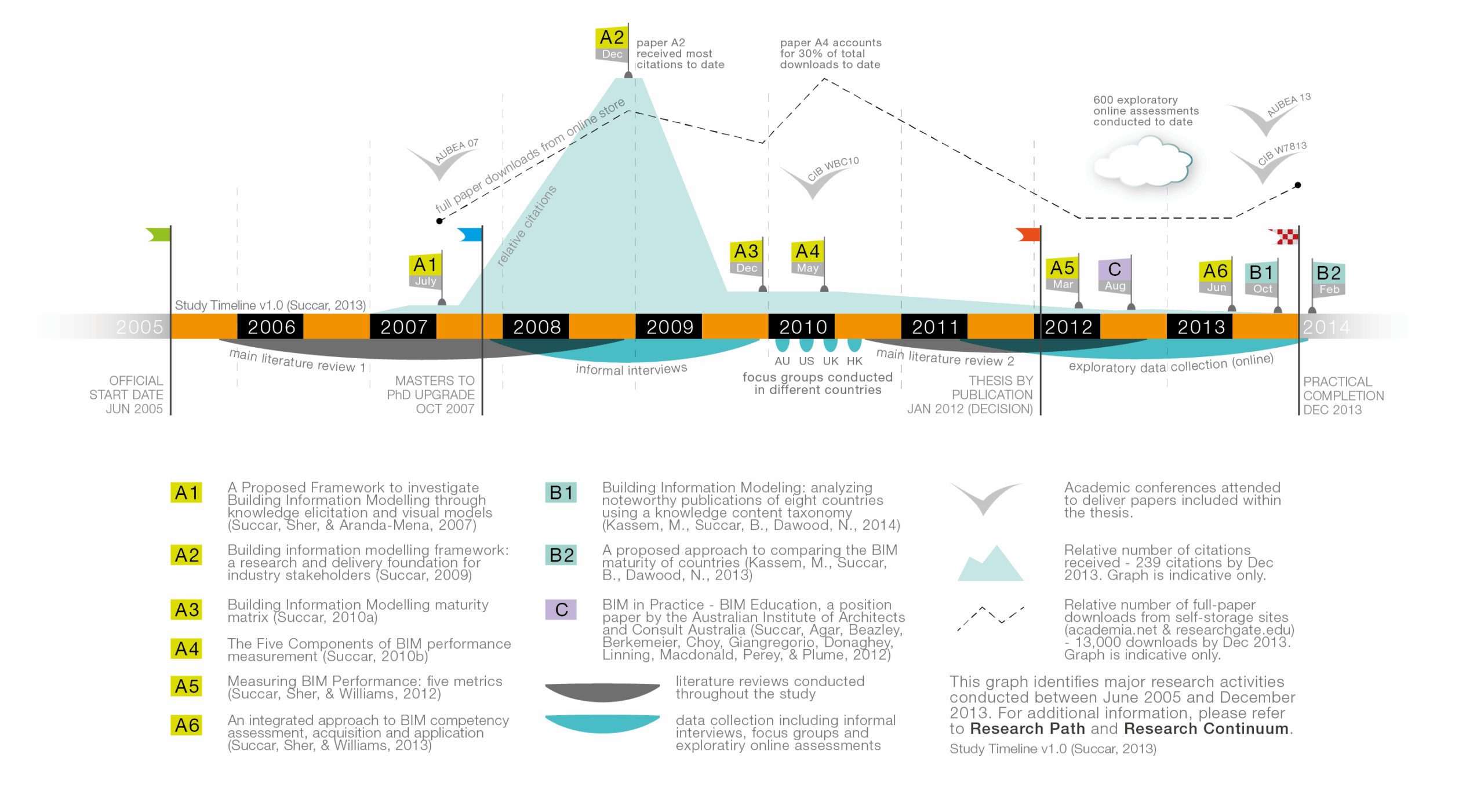
The Research Timeline graph identifies literature reviews, data collection efforts and published papers (including citations and downloads) between June 2005 and December 2013.
Jul. 29, 2014
27. Conceptual Hierarchy
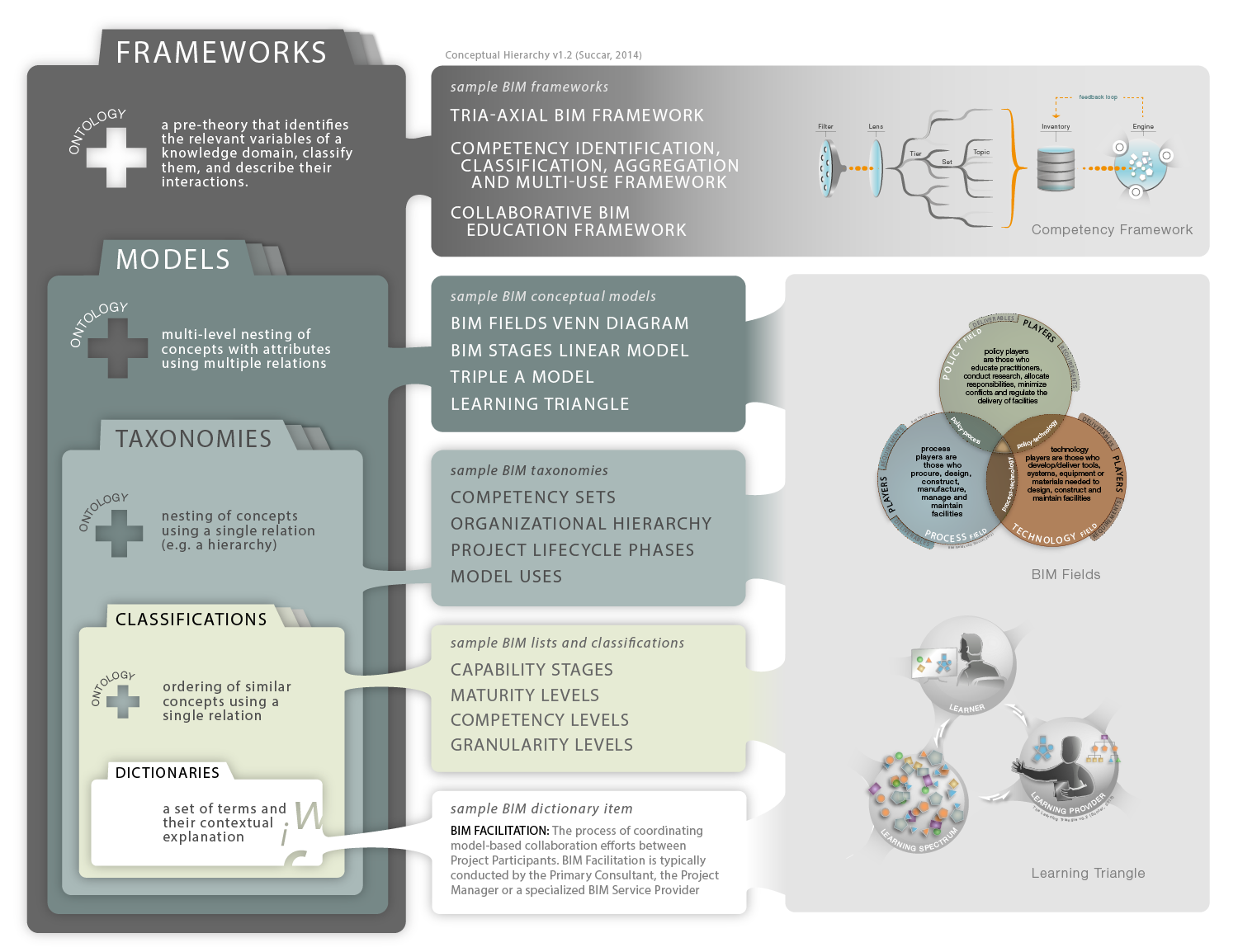
The BIM framework is a collection of interrelated conceptual constructs – models, taxonomies, classifications, and dictionaries – glued together by a common conceptual ontology.

Jul. 20, 2014
26. Macro Maturity Components
The Macro Maturity Components model identifies eight complementary components for measuring and establishing the BIM maturity of whole markets.
Jul. 15, 2014
25. Knowledge Content Taxonomy
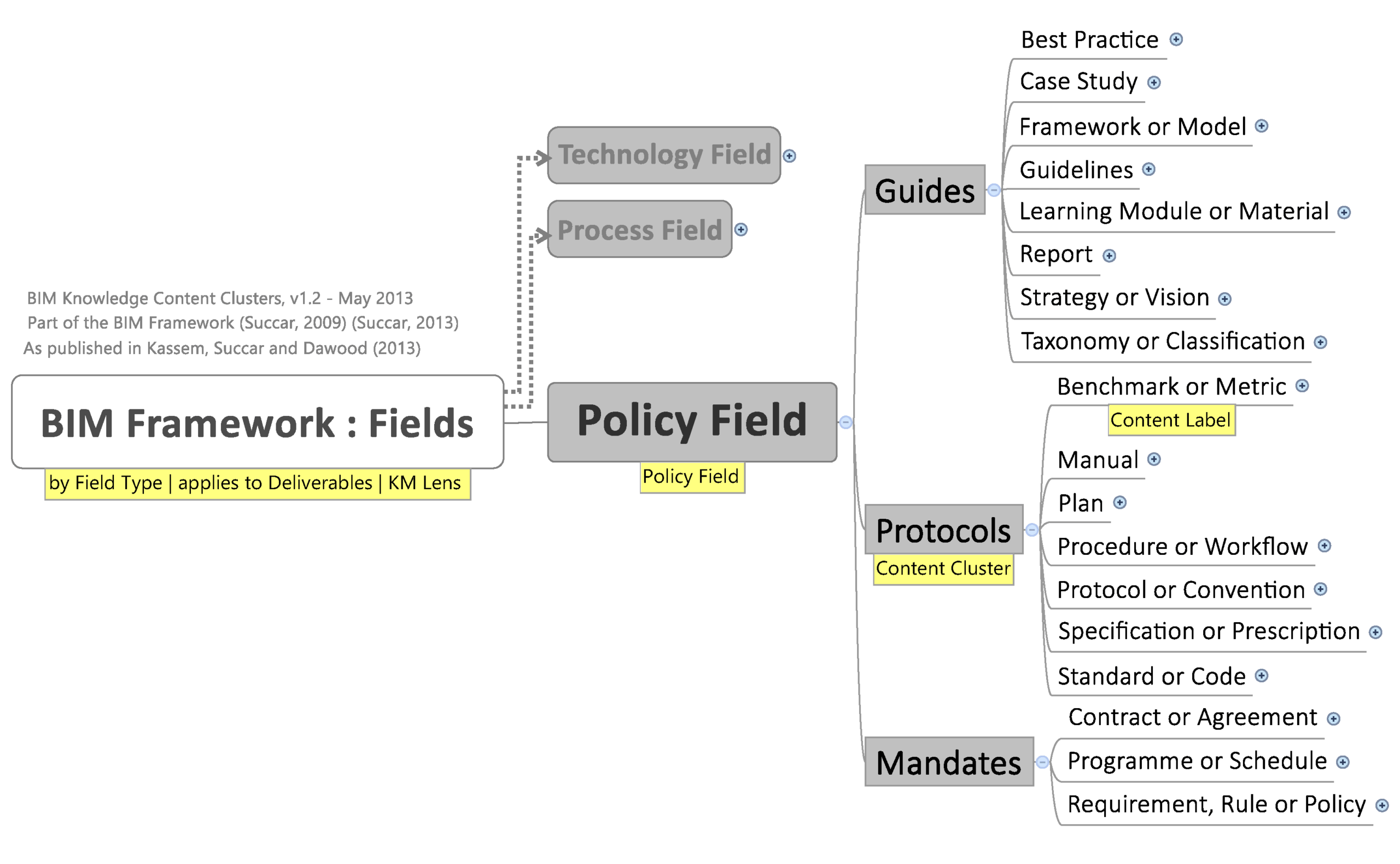
The Knowledge Content Taxonomy (KCT) includes several classifications. The main classification identifies three knowledge content clusters (guides, protocols and mandates) which are subdivided into eighteen knowledge content labels (e.g. report, manual, and contract).
Jul. 08, 2014
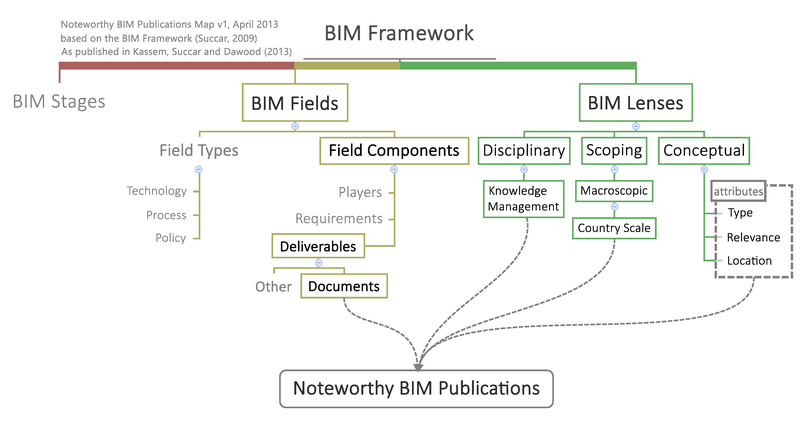
24. Noteworthy BIM Publications
Noteworthy BIM publications (NBP)s are publically-available documents developed by various industry and academic entities; aimed at a wide audience; and intended to promote BIM understanding, regulate BIM implementation or mandate BIM requirements.
Jun. 03, 2014
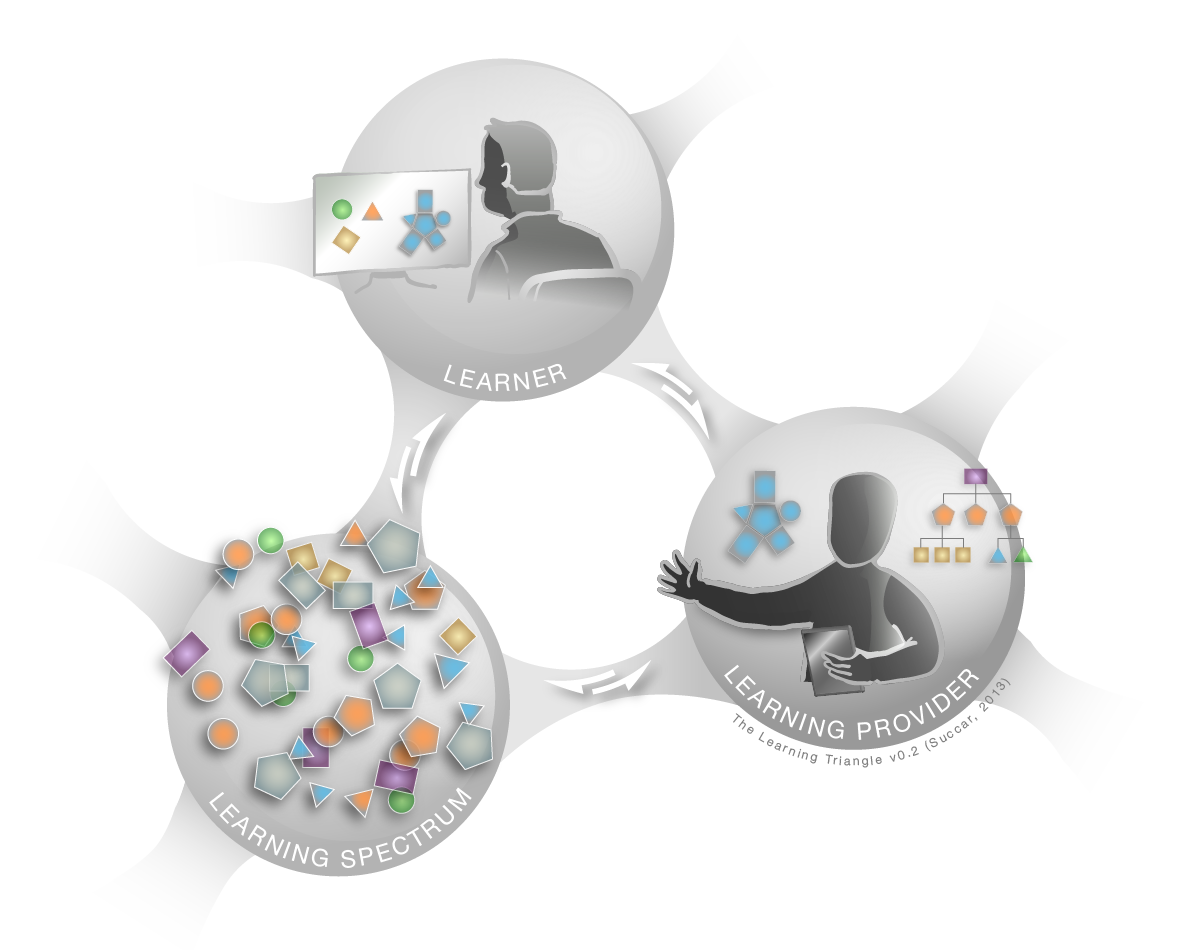
23. BIM Learning Triangle
This conceptual model represents BIM learning as a triangular interaction between BIM learners, BIM learning providers and the BIM learning spectrum.
Jun. 03, 2014
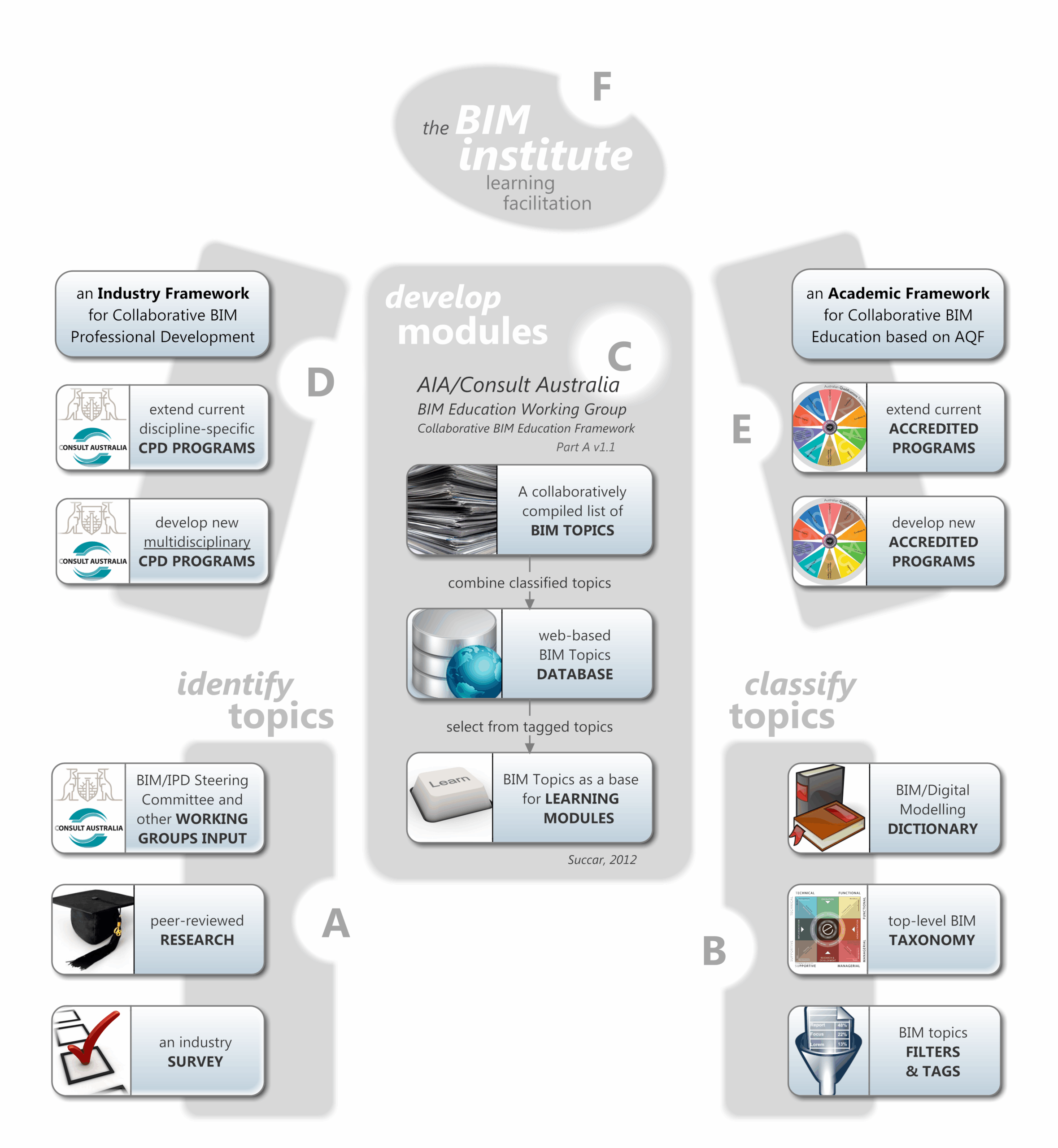
22. Collaborative Education Framework
The collaborative education framework (CEF) has been developed as a joint effort between academia and industry in Australia. CEF was first published as part of the AIA/CA BIM in Practice, BIM Education position papers (AIA/CA, 2012) and is built around the principles, models, taxonomies, and classifications of the BIM Framework. CEF includes six main complementary components.
Jun. 02, 2014
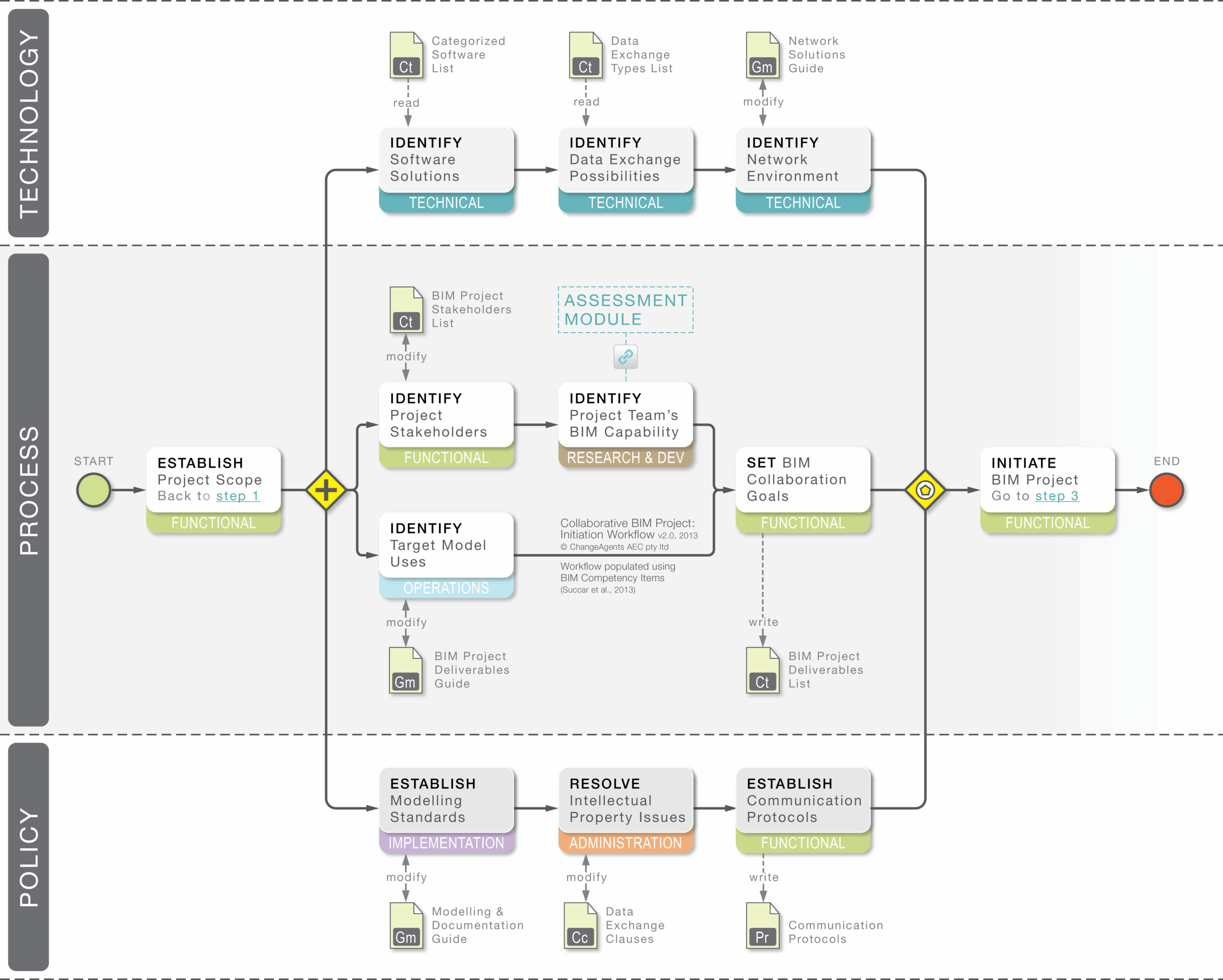
21. Competency-based Workflow
The Competency-based workflow uses BIM competency items from across several Competency Sets to clarify a specific process – how to initiate a collaborative BIM project.
May. 27, 2014
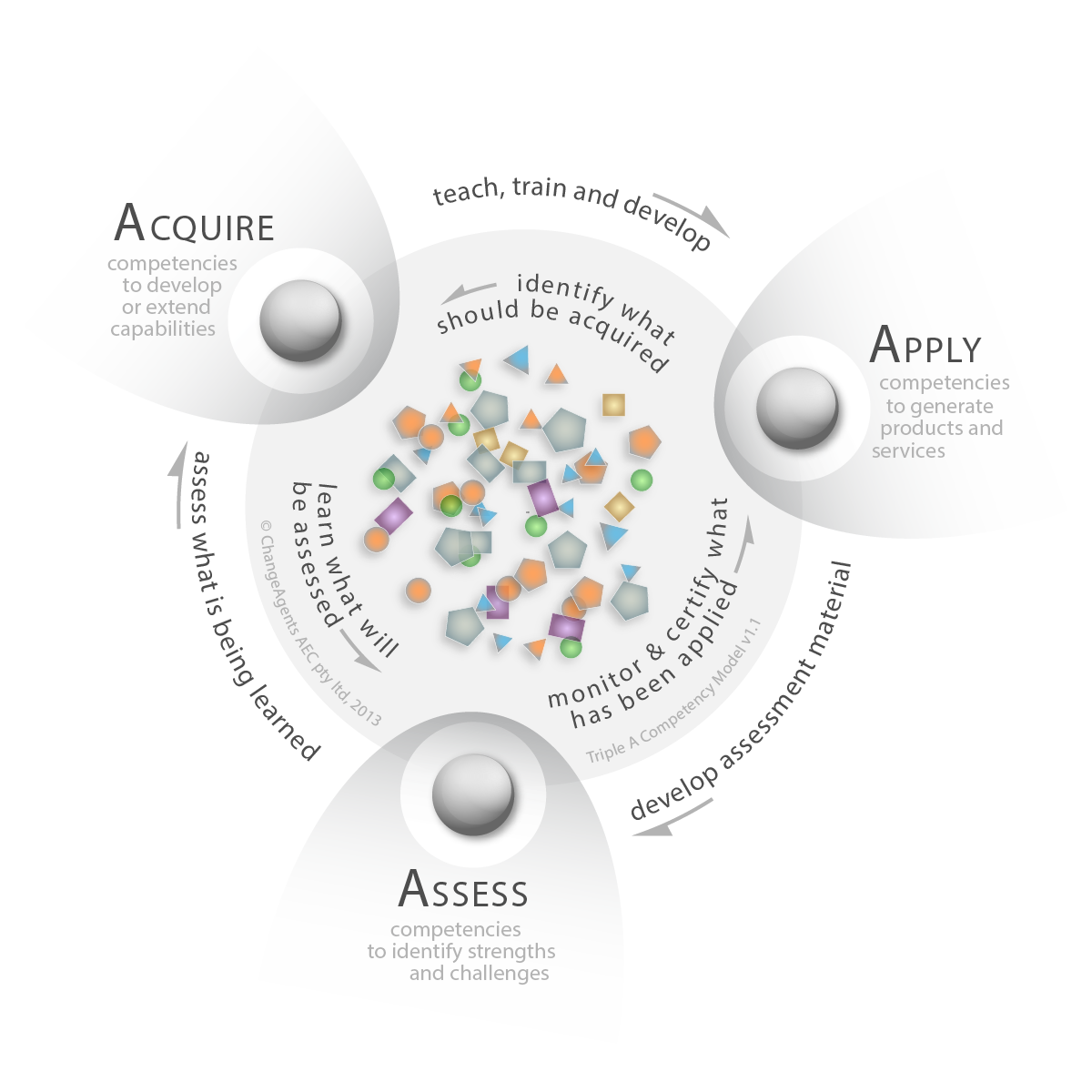
20. Triple A Competency Model
The Triple A Competency Model is a knowledge engine which uses structured BIM competency items to perform three complementary actions: competency Acquisition, competency Application and competency Assessment.
Apr. 05, 2014
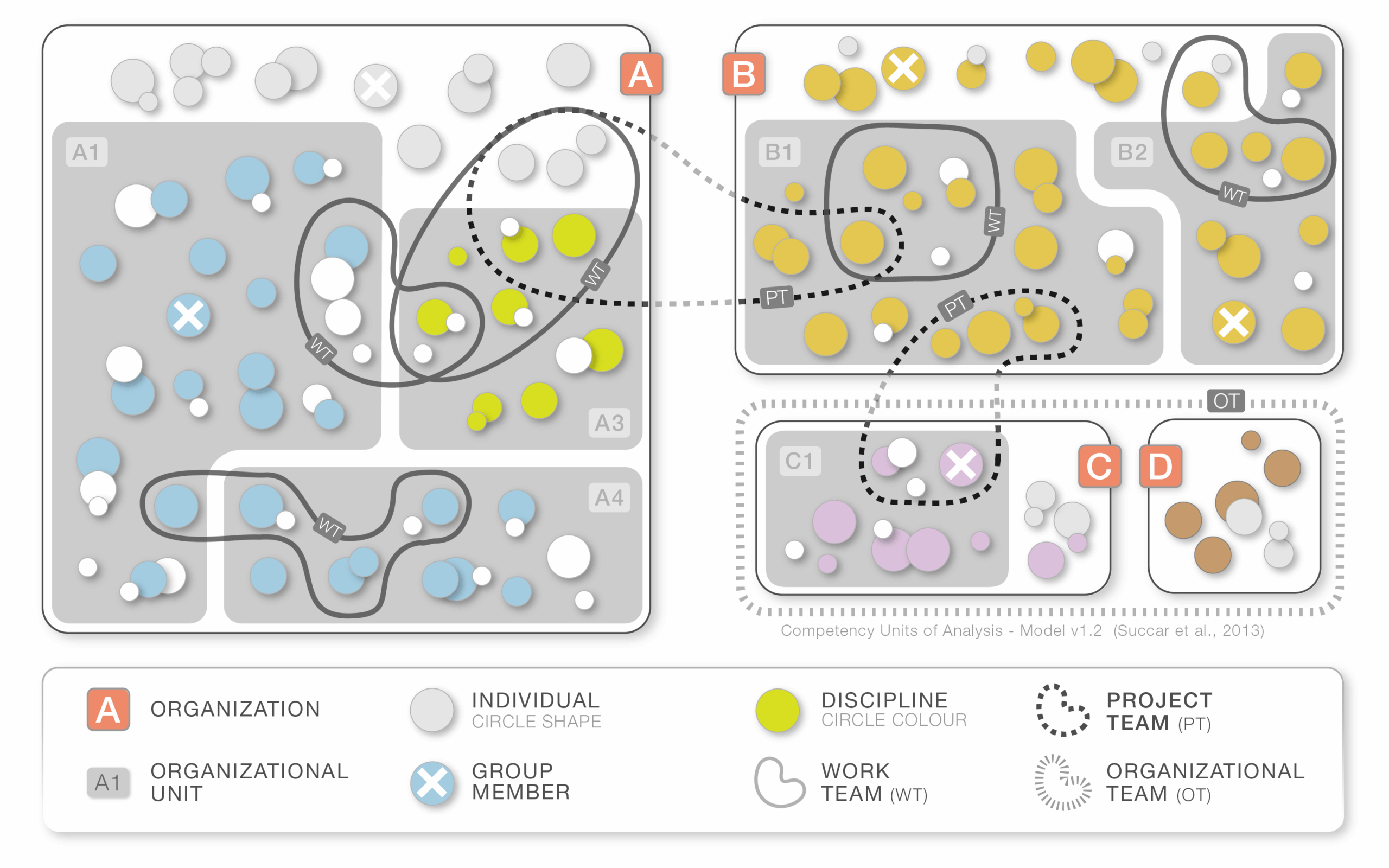
19. Competency Units of Analysis
This Competency Units of Analysis is a conceptual model identifies several units for the purposes of competency analysis.
Mar. 16, 2014
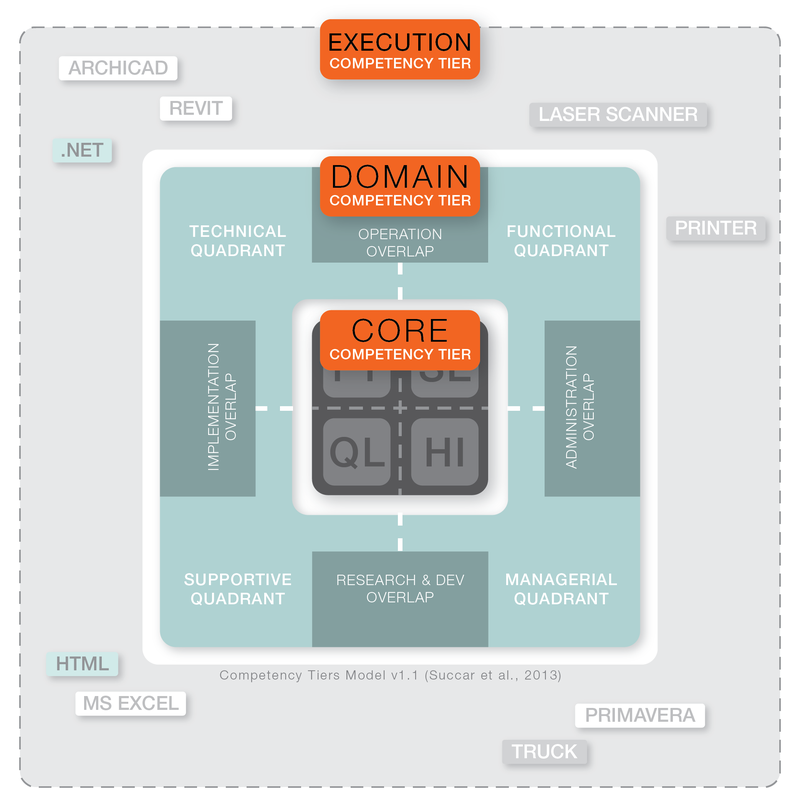
18. Competency Tiers
There are three Competency Tiers within the Competency Hierarchy – Core, Domain and Execution: The CORE Competencies Tier reflects the personal abilities of individuals enabling them to conduct a measureable activity or deliver a measurable outcome. This core tier is subdivided into the following four competency sets: Foundational traits – personal attributes inherent in an individual that cannot be acquired through
Mar. 16, 2014
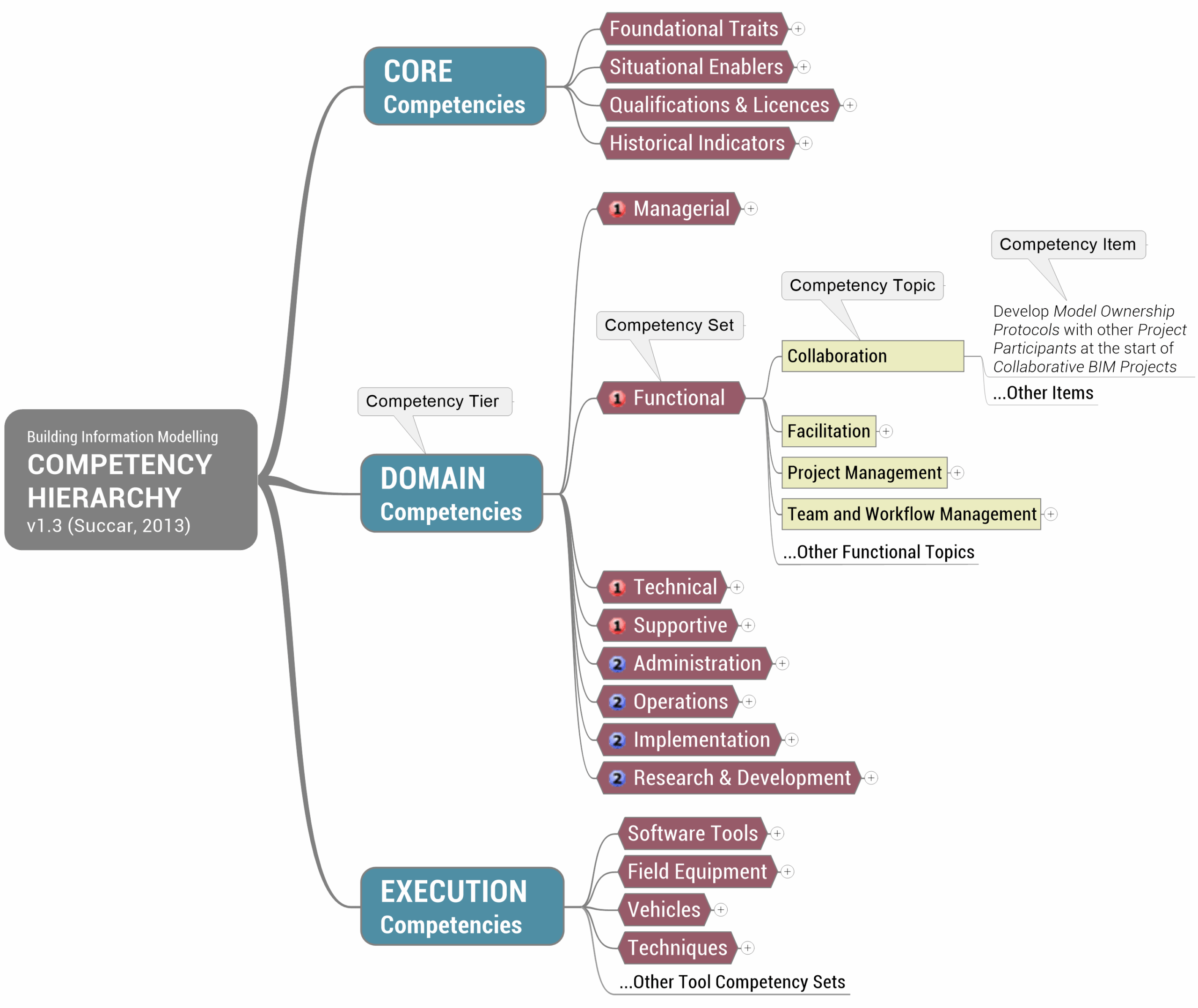
17. Competency Hierarchy
The BIM Competency Hierarchy includes three BIM competency tiers which are divided into several BIM competency sets which are, in turn, subdivided into BIM competency topics. These tiers, sets, topics – and their granular subdivision into competency items – represent all the measureable abilities, outcomes and activities of individuals who deliver model-based products and services.
Mar. 16, 2014
16. Competency Flow
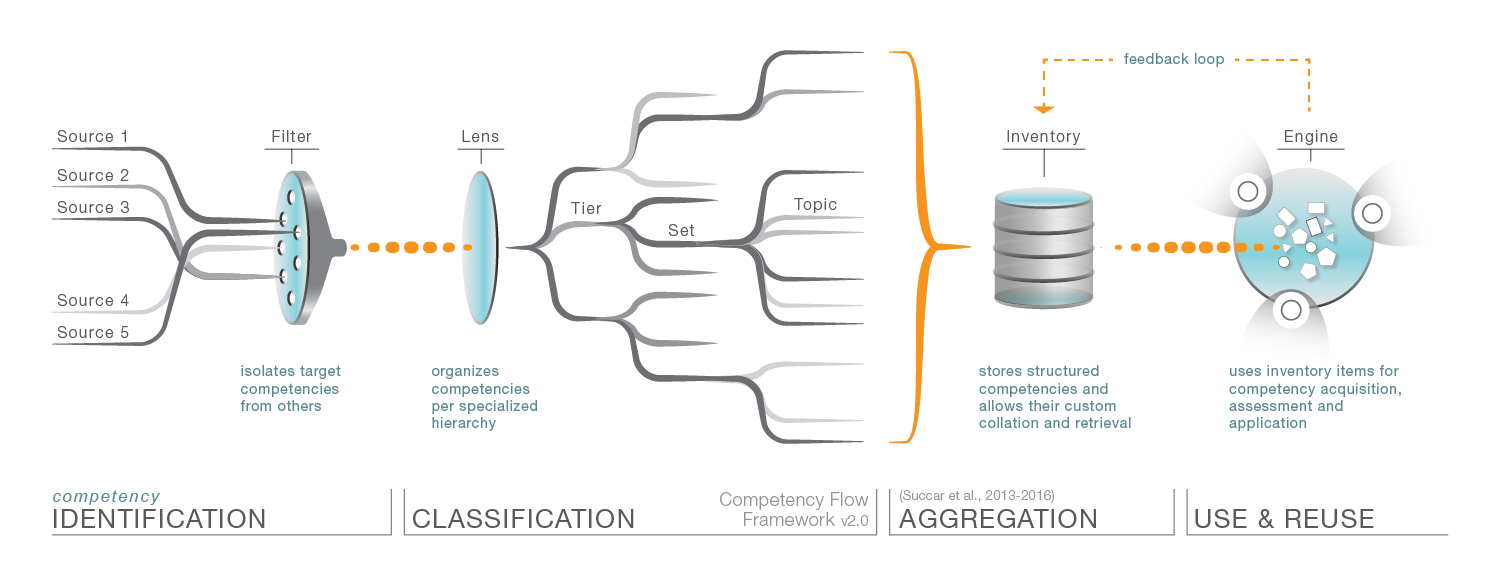
Competency Flow Framework (replaces Competency Flow Model, 2013) Modified Sep 24, 2016: The Competency Flow Framework describes how individual competencies can be identified, classified, aggregated and then used/re-used. The framework includes a number of components: Competency Identification through analysing job advertisement; dissecting BIM-specific roles as defined within BIM guides, BIM management plans and similar documents; reviewing academic literature and industry publications; adopting
Mar. 16, 2014
15. Individual Competency Index
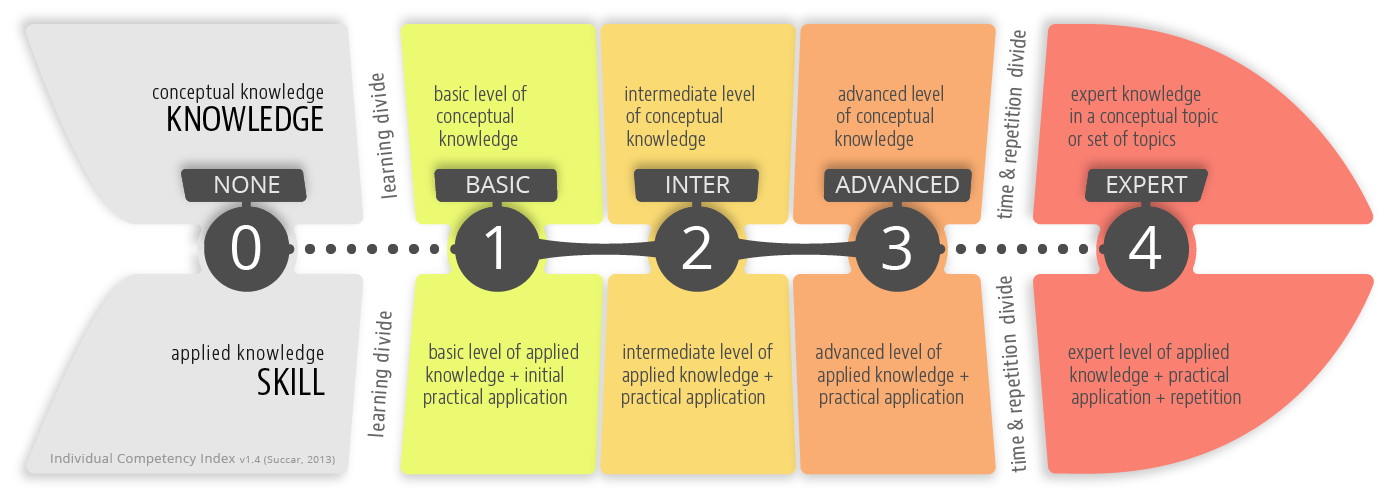
Individual Competency Index (older version v1.2) The Individual Competency Index (ICI) measures both conceptual knowledge (referred to as knowledge) and procedural knowledge (referred to as skill) which are needed by individuals in order to perform a defined activity or deliver a measureable outcome. The ICI identifies five competency levels (0-4): Level 0 (none) denotes a lack of competence in a specific
Jan. 08, 2014
14. Maturity Matrix Components
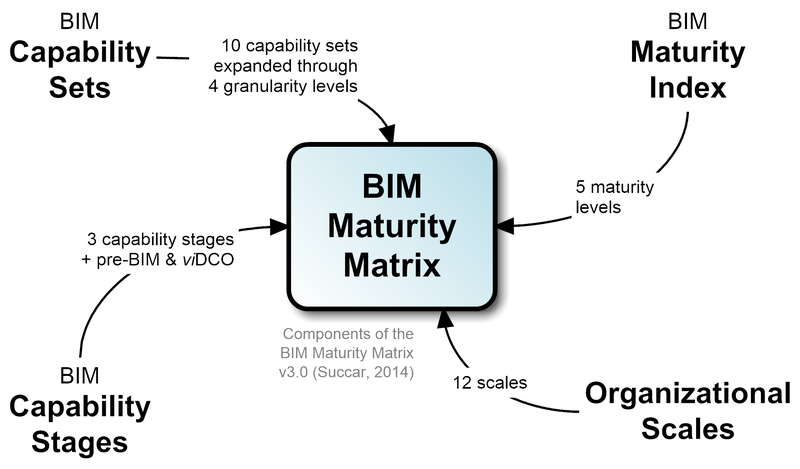
Updated April 18, 2014…The BIM Maturity Matrix (BIm³) is a knowledge tool which incorporates many BIM Framework components for the purpose of performance measurement and improvement: BIM Capability Sets; BIM Maturity Index; Organizational Hierarchy; and BIM Capability Stages.
Jan. 08, 2014
13. Structure of BIM Capability Sets
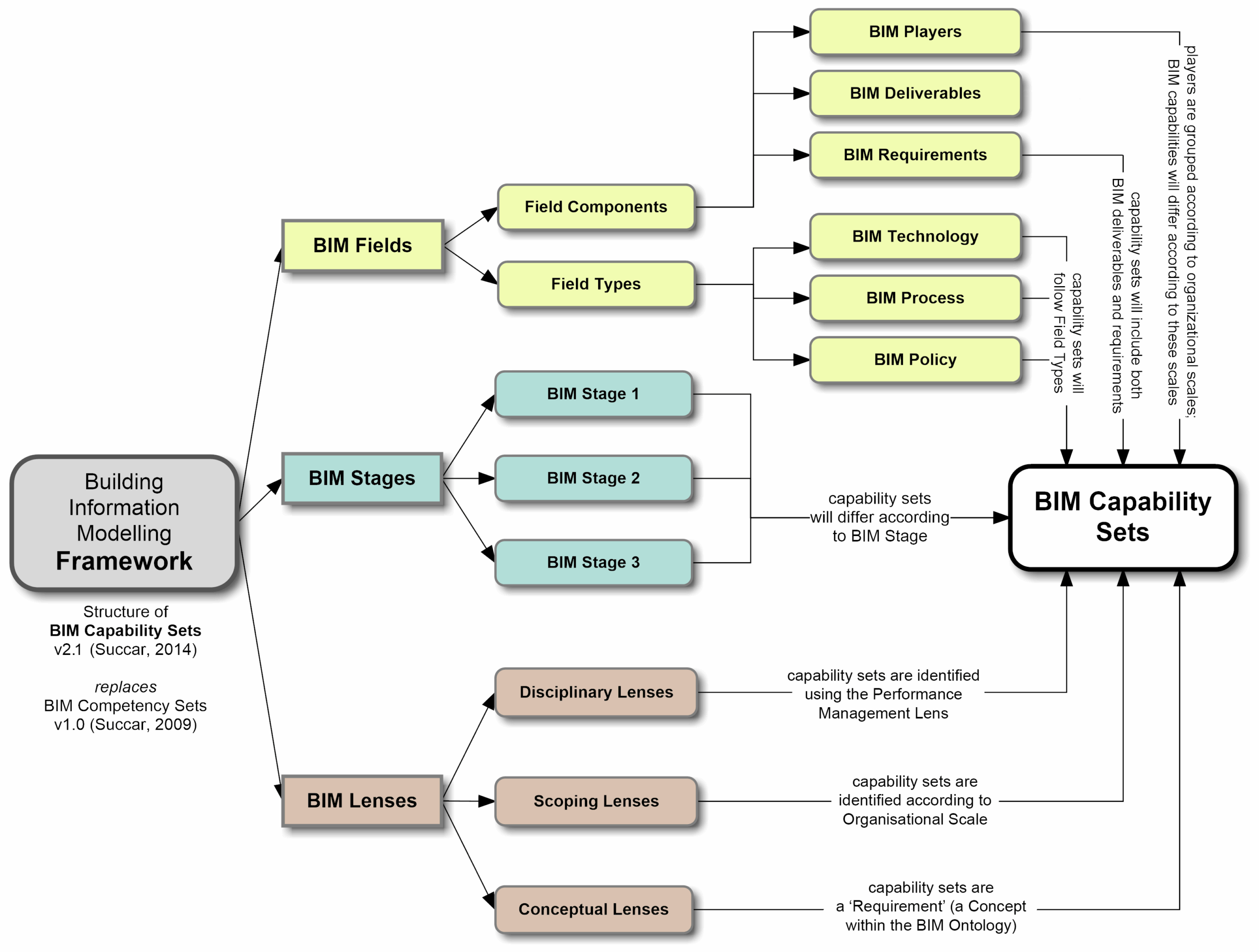
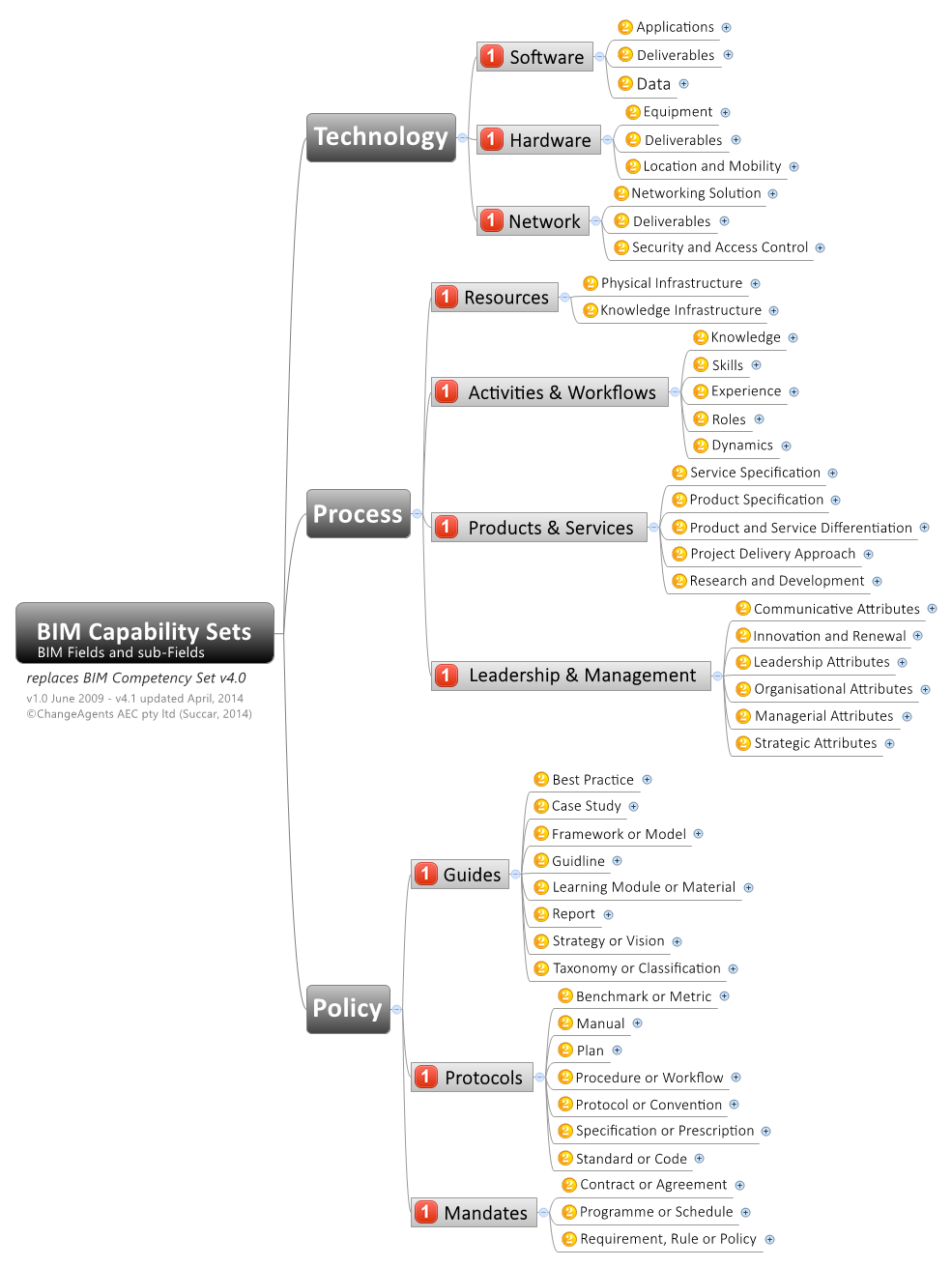
Updated April 14, 2014 (v2.0) and August 20, 2015 (v2.1)…This graphic provides a visual explanation of the BIM Capability Sets as derived from BIM Fields, BIM Stages and BIM Lenses. Below is a short video explaining the above, as available on the Framework’s YouTube channel:
Jan. 08, 2014
12. BIM Capability Sets
Updated April 18, 2014… BIM Capability Sets is a taxonomy representing BIM Player’s abilities to satisfy a BIM Requirement or generate a BIM Deliverable. A BIM Capability Set is a hierarchical collection of BIM abilities identified using the BIM Framework ( (refer to Structure of BIM Capability Sets) for the purposes of BIM implementation and assessment. Please note that the term
Dec. 30, 2013
11. Organizational Hierarchy
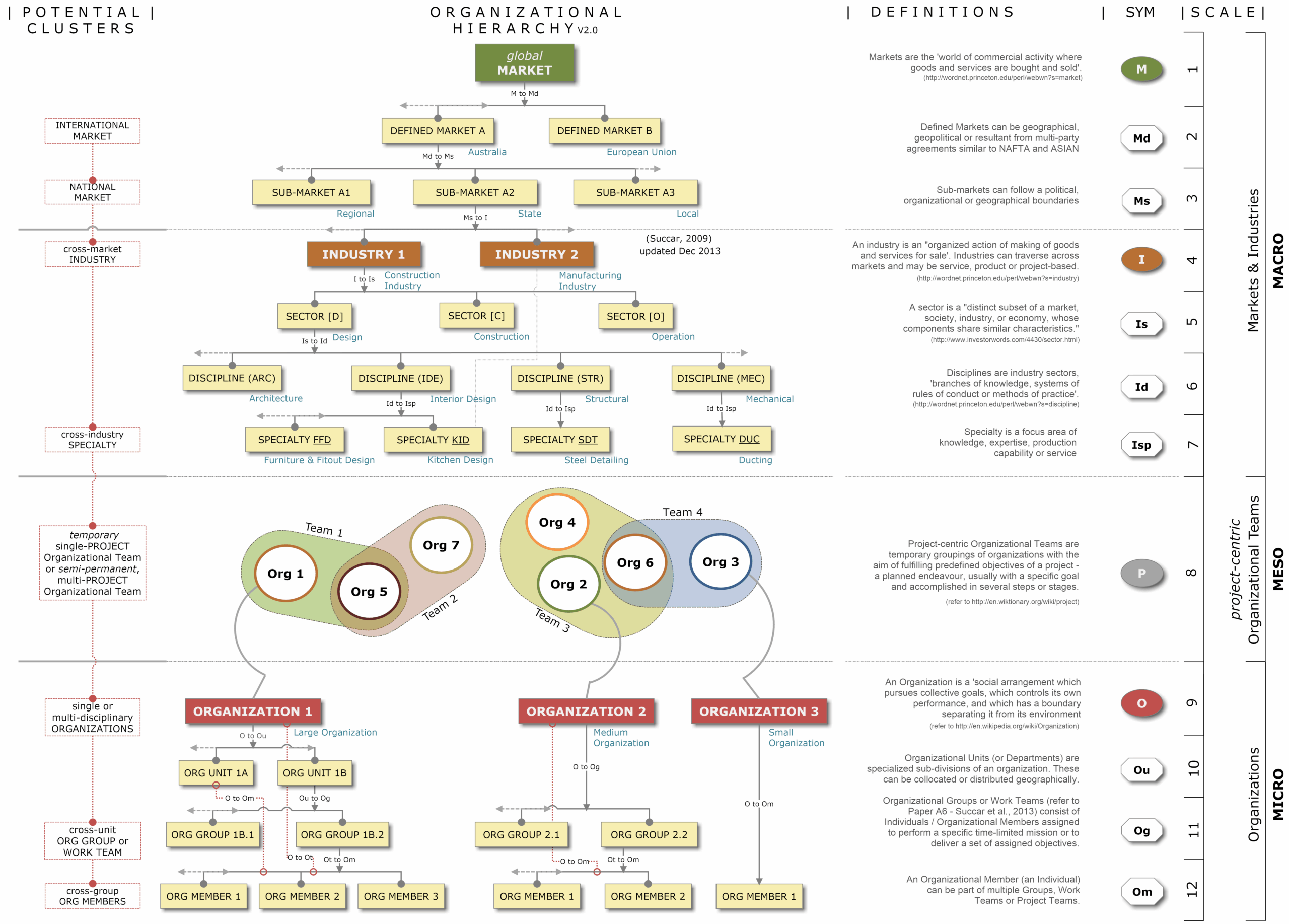
The Organizational Hierarchy is a conceptual model based on the Organizational Scales’ taxonomy which identifies 12 organizational scales ranging from Markets (OrgScale 1, the largest) to Individuals (OrgScale 12, the smallest). The 12 OrgScales belong to three OrgScale Clusters: Macro (1-7), Meso (8) and Micro (9-12). The 12 OrgScales are: Global Market Defined Market (e.g. European Union or individual countries) SubMarket (e.g. regional, state or local markets)

Dec. 30, 2013
10. BIM Maturity Index
The BIM Maturity Index (BIMMI) is a conceptual model depicting five distinct Maturity Levels: (a) Initial/ Ad-hoc, (b) Defined, (c) Managed, (d) Integrated and (e) Optimized.
Dec. 24, 2013
9. Object-based models
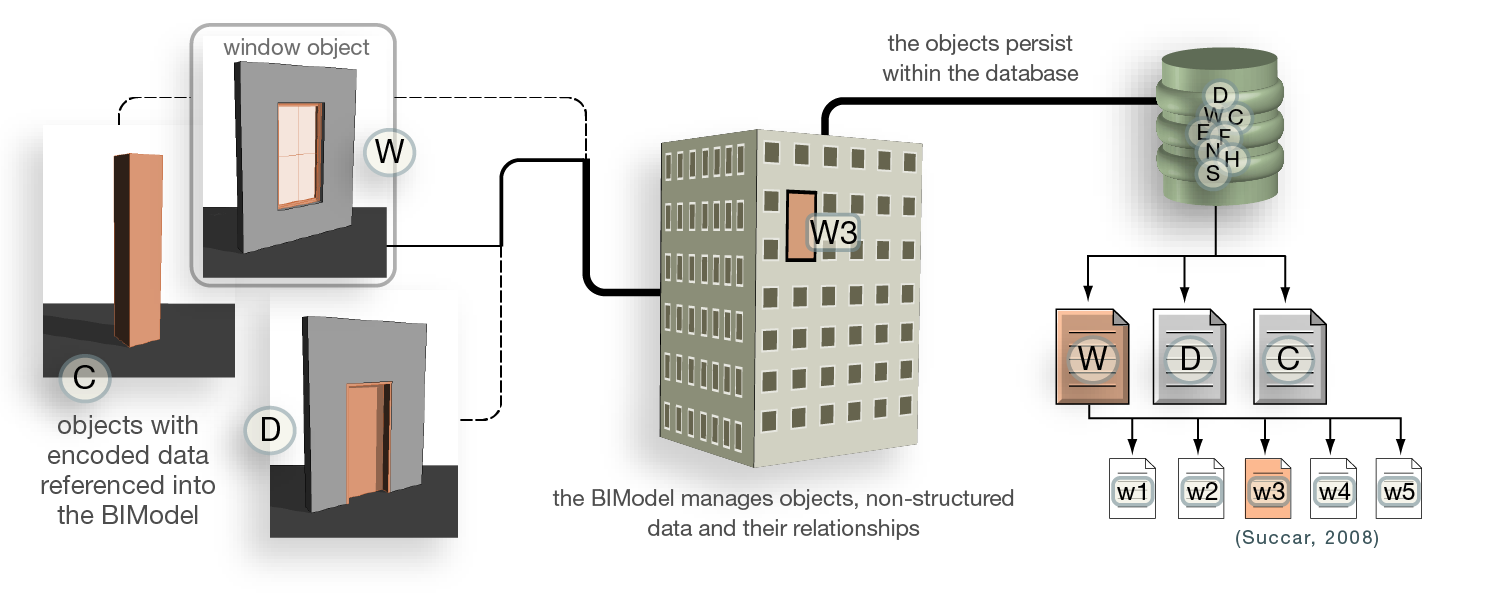
Building information models (note Models not Modelling) are a collection of objects represent ing physical elements like doors, columns and their host spaces. BIModels encapsulate a level of machine ‘intelligence’ in how these objects and spaces relate to each other.
Dec. 24, 2013
8. Project Lifecycle Phases
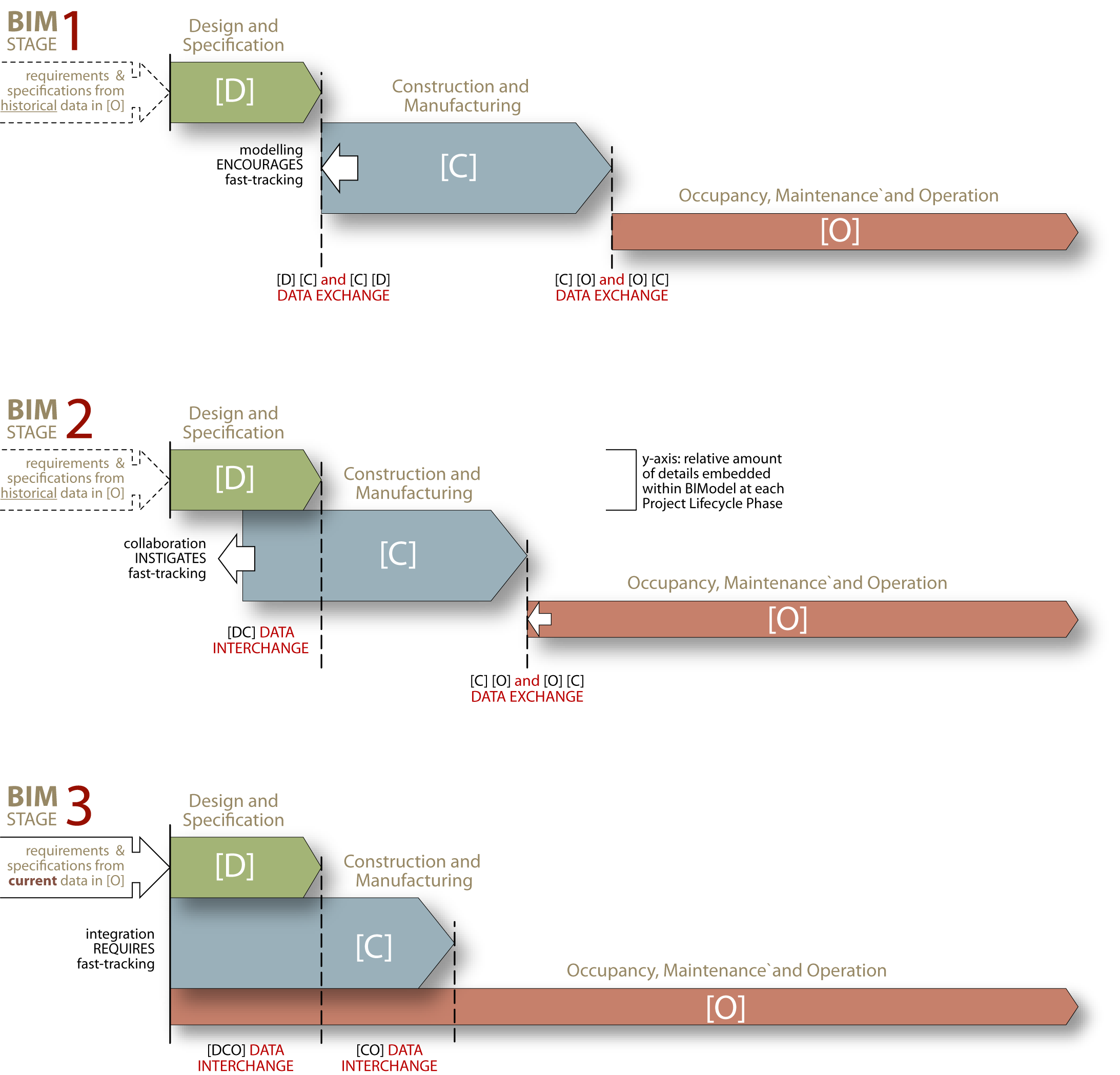
Construction projects pass through three major lifecycle phases: Design [D], Construction [C] and Operations [O]. These phases are also subdivided into sub-phases which are in turn further subdivided into activities, sub-activities and tasks
Dec. 22, 2013
7. Field Overlaps
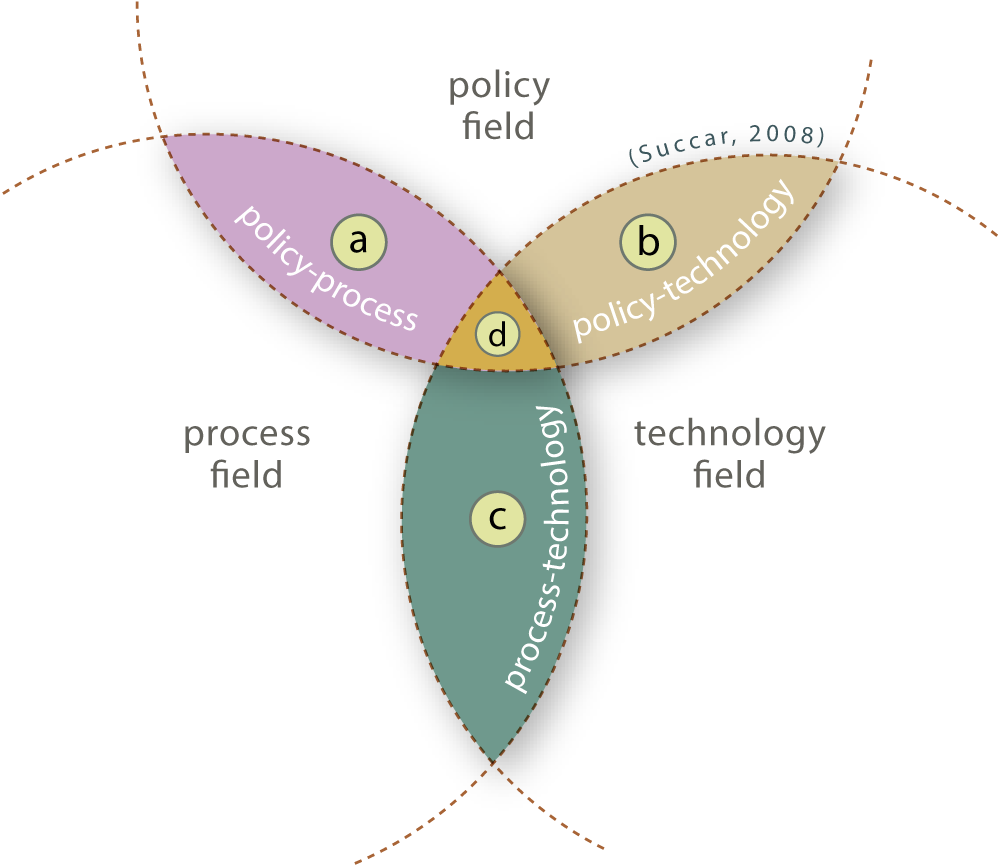
The three BIM Fields overlap as they share players and deliverables. This overlap between fields occurs when: (1) A deliverable requires players from two or more fields. For example, the development and implementation of Industry Foundation Classes (IFC) across the construction industry require the joint efforts of Policy players (researchers and policy makers) and Technology players (software developers). (2)
Dec. 22, 2013
6. Field Interactions
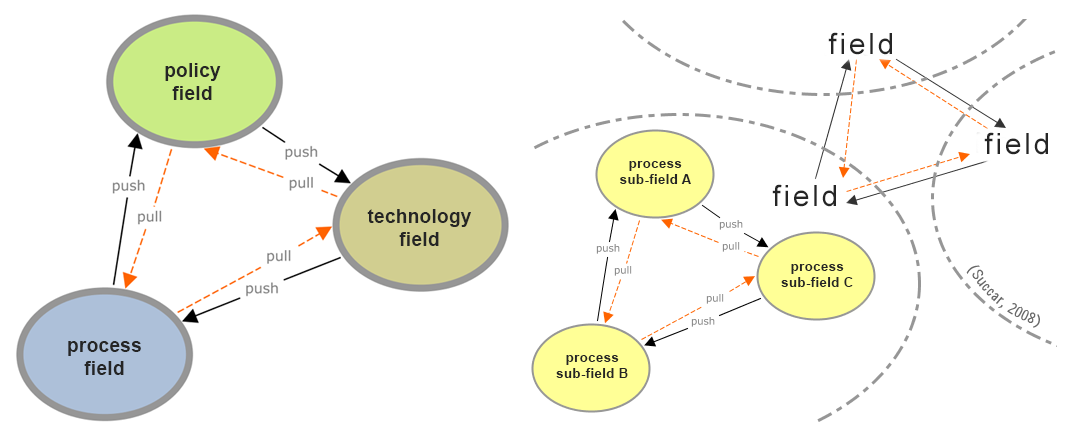
BIM Interactions are push-pull knowledge transactions occurring within or between BIM Fields and sub-Fields. Push mechanisms transfer knowledge to another field or sub-field while pull mechanisms transfer knowledge to satisfy a request by another field or sub-field. Sample transactions include data transfers, team dynamics and contractual relationships between fields and sub-fields. Policy Field Process Field Technology Field Sample interactions between
Dec. 22, 2013
5. BIM = MIB
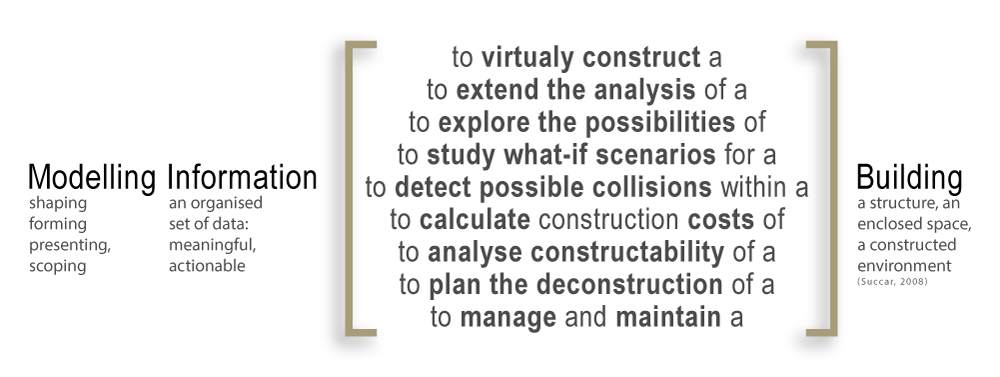
One of the easiest ways to explain the meaning of BIM to non-specialists is by flipping the term around from Building Information Modelling (BIM) to modelling information to perform a function related to buildings. The functional use of information is later formalised through the term Model Uses and represented by the Model Use Wheel.
Dec. 01, 2013
4. BIM Lenses
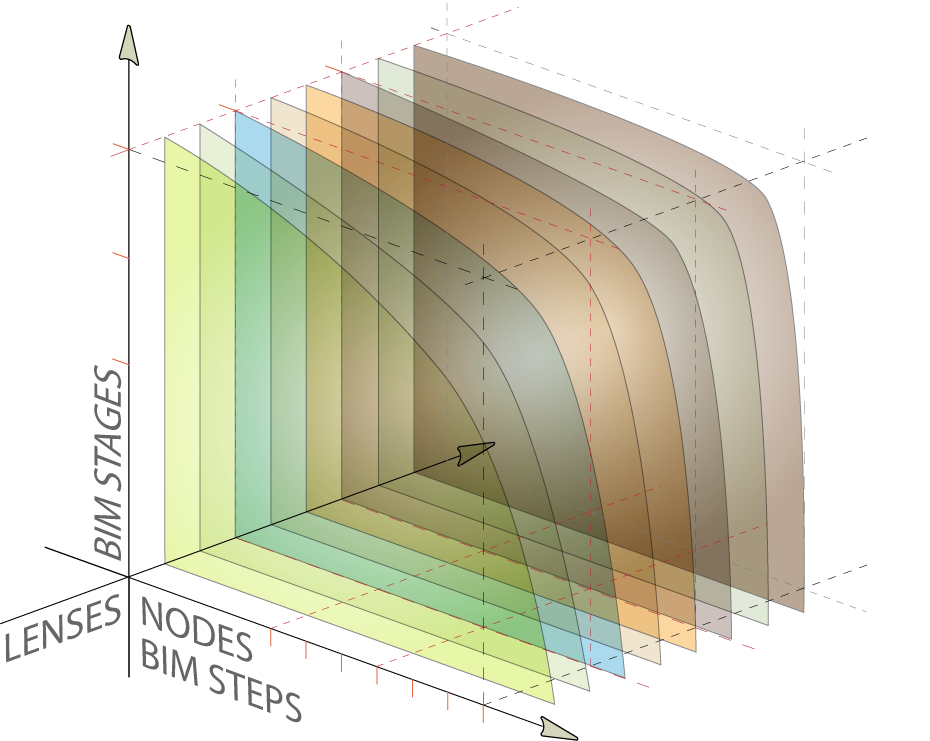
BIM Lenses represent the third dimension of the Tri-Axial Model and generate its depth of enquiry. BIM Lenses are distinctive layers of analysis applied to Fields and Stages to generate Knowledge Views. They abstract the BIM domain and control its complexity by removing unnecessary detail. Lenses allow domain researchers to selectively focus on any aspect of the DCO industry and
Dec. 01, 2013
3. BIM Stages
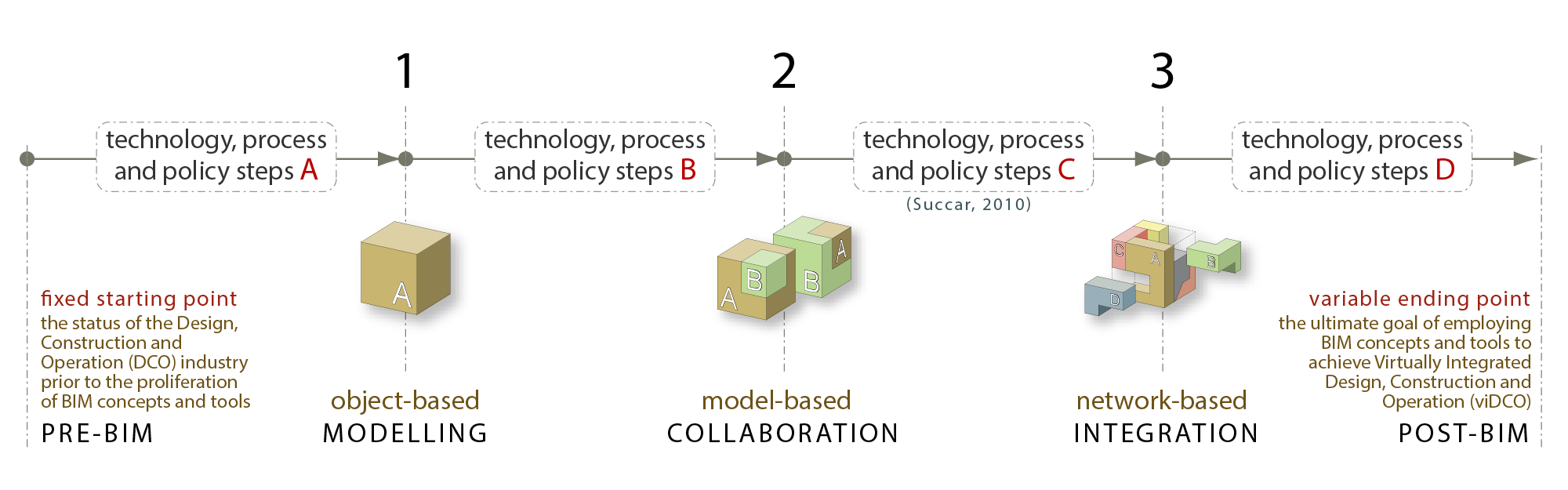
The BIM Stages Model identifies pre-BIM, three BIM Capability Stages and the ultimate vision from implementing BIM.
Dec. 01, 2013
2. BIM Fields
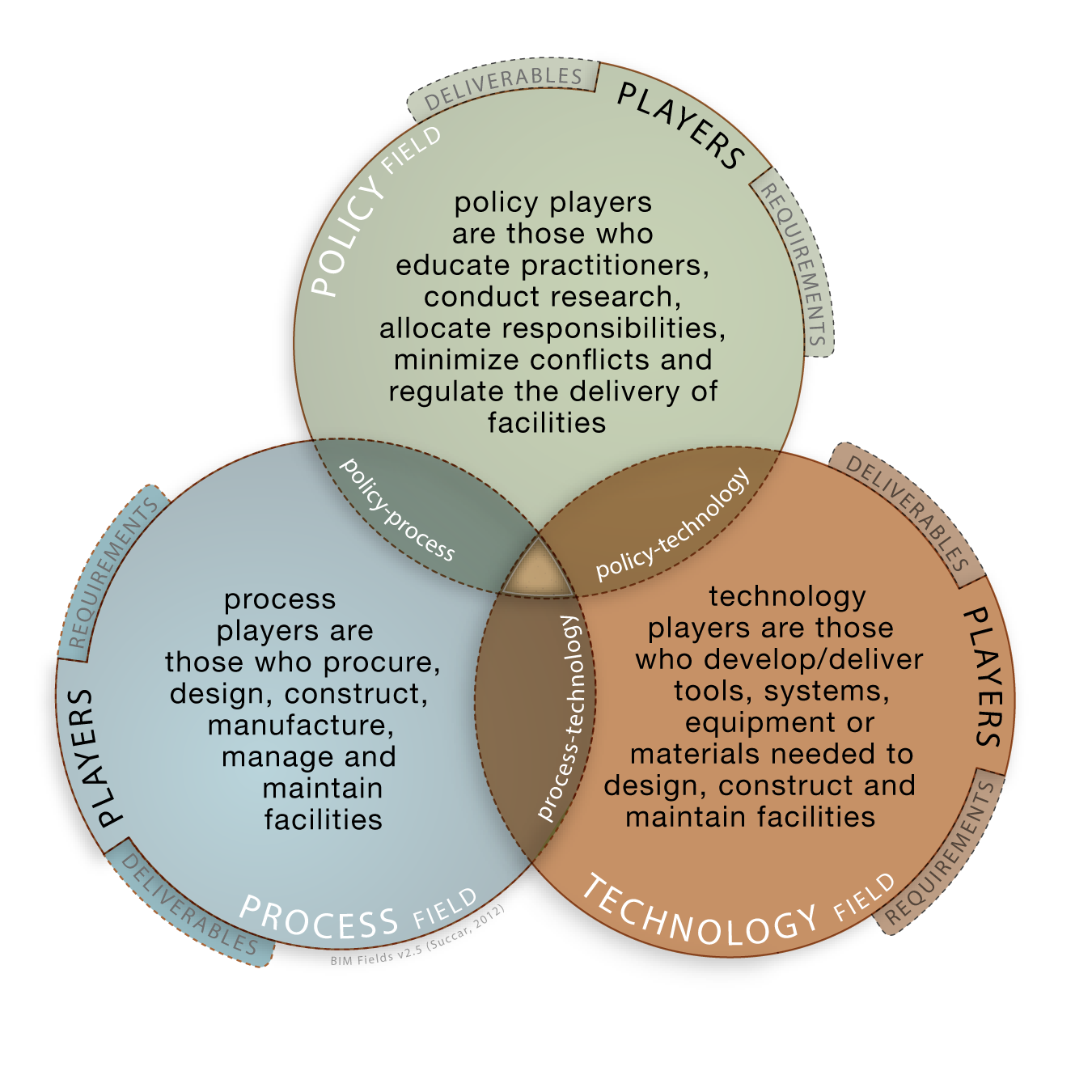
Click of a larger version | older versions: v2.0 – 2010, v1.2 – 2008 and v1.1 – 2007 Also available in Spanish, German, Italian and French This conceptual model represents BIM Fields, the first dimension of the Tri-axial Model. BIM Fields refer to all topics, activities, and actors across the BIM domain. The Venn diagram (three overlapping circles) identifies Field Types (Technology, Process and Policy), Field Components (Players, Deliverables
Dec. 01, 2013
1. The Tri-Axial Framework
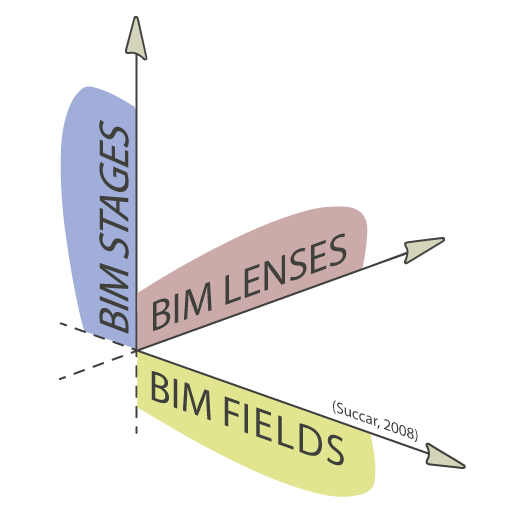
This conceptual model explains the multi-dimensional relationship between the three main components of the BIM framework: BIM fields of activity identifying domain players, their requirements and deliverables; BIM stages delineating minimum capability benchmarks; and BIM lenses providing the depth and breadth of enquiry necessary to identify, assess and qualify BIM fields and BIM stages.